
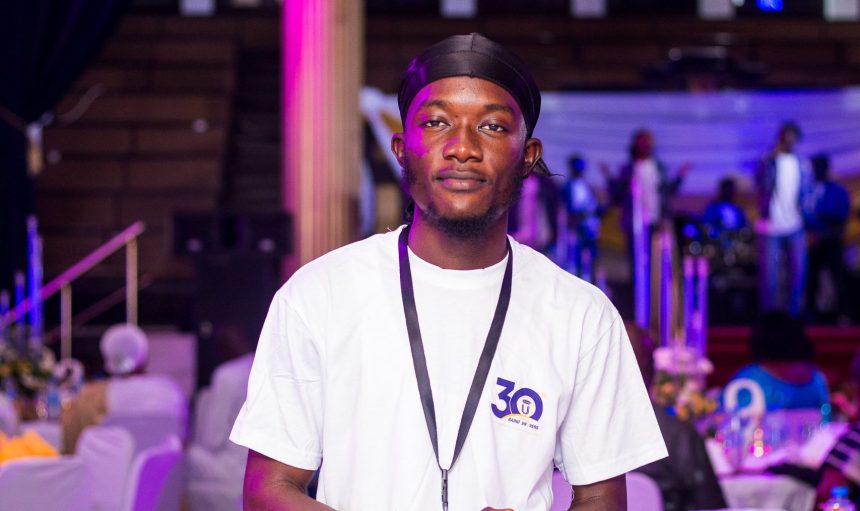
On May 9, I attended the Telecel Ghana Music Awards for the first time in my life, not as an artist, but as a journalist seated among the audience. Yet the experience left me thinking far beyond music itself.
Growing up, I viewed the TGMAs as the pinnacle of Ghana’s music industry; a cultural space associated with excellence, prestige, aspiration, and national relevance. As a young creative, I always imagined music would be my pathway into that room. Ironically, journalism brought me there first.
But while many people focused on the performances and glamour, I found myself paying attention to the structures surrounding them: media power, branding, audience behaviour, cultural capital, visibility, access, and the subtle inequalities that shape participation within creative spaces.
One thing that particularly stood out to me was accessibility. For many ordinary young Ghanaians who passionately follow music and popular culture, attending an event like the TGMAs remains financially out of reach due to high ticket prices. Yet these same audiences remain the backbone of the industry’s cultural relevance and virality. That contradiction reflects something larger about entertainment itself: creative industries often unite people culturally while simultaneously reproducing exclusion and hierarchy.
As someone whose interests intersect music, media, digital culture, and sociology, the experience reminded me that music is never just music. Music is sociology.
Growing Concentration of Media Power In A Single Media Entity
To begin with, one of my biggest reflections from the TGMA 2026 experience was the growing concentration of media power surrounding the awards scheme, particularly the overwhelming dominance of one media institution within the event ecosystem.
There is no denying the operational strength and influence of TV3 and the broader Media General brand within Ghana’s media landscape. Their investment, consistency, and production quality have positioned them among the country’s leading media institutions. However, the issue is not their success itself, but the increasing centralisation of visibility, hosting opportunities, and cultural influence around a single media entity within an industry that thrives on plurality and competition.
From red carpet coverage to live-streaming rights and the overwhelming visibility of TV3-affiliated personalities throughout the night, one question kept returning to me: what happens to the broader media ecosystem when one institution becomes the near-exclusive gatekeeper of cultural visibility at a national entertainment event?
Modern audiences increasingly disengage when cultural platforms begin to feel repetitive, overly centralised, and limited in representation. Younger audiences desire freshness, multiplicity, competition and broader participation. This is partly why new media spaces in Ghana continue to grow rapidly. Young creatives are redefining storytelling, audience engagement, digital promotion, and entertainment commentary, yet many of these platforms remain structurally excluded from premium industry opportunities.
This extends beyond entertainment into the broader structure of Ghanaian media itself. Younger professionals often struggle to access high-visibility opportunities due to entrenched institutional hierarchies and the monopolisation of space by already established figures. This is not an attack on experienced media personalities. Many have contributed immensely to Ghanaian broadcasting. But an important sociological question remains: how does an industry renew itself if pathways for younger talent remain limited?
Media ecosystems thrive through circulation, mentorship, experimentation, inclusion, and intergenerational transition. Without this, industries risk stagnation, audience fatigue, and creative decline.
Ultimately, Ghana’s music and media industries belong to all of us. Expanding access and diversifying participation would not weaken established institutions; it would strengthen the entertainment ecosystem and make it more dynamic and globally competitive.
The Problem With Predictable Spectacle
Furthermore, the TGMA red carpet this year largely felt predictable and aesthetically repetitive. The contrast became even more noticeable because the Africa Magic Viewers’ Choice Awards (AVMCs) happened the same night, and social media was already flooded with bold and experimental fashion moments from that side.
Beyond a few standout appearances, much of the TGMA red carpet felt trapped between excessive glamour performance and questionable styling choices. More importantly, it lacked surprise, thematic coherence, and memorable fashion storytelling; qualities that increasingly define modern award-show culture globally.
Some of the interviewing choices also leaned too heavily into sensationalism. For instance, Regina Van Helvert asking Fella Makafui what her ex, Medikal, would think upon seeing her felt unnecessary for a red-carpet setting that should ideally prioritise meaningful engagement over viral discomfort.
When Technical Ambition Disrupts Performance
One of the most technically interesting moments of the night came during Medikal’s performance. While television viewers may not have fully noticed it, there were moments inside the Grand Arena where noticeable synchronisation inconsistencies emerged between the live band, programmed stems, and vocal playback.
At first glance, such moments can easily be interpreted as an artist simply performing offbeat. But from a production and performance standpoint, the issue appeared more layered. Hybrid performance systems involving live instrumentation, playback stems, ad-libs, and vocal doubles require extremely tight synchronisation. Once an artist drifts away from the programmed BPM, the live band can attempt to adjust dynamically, but the stems themselves remain time-locked. The result was audible timing tension: Medikal attempting to regain synchronisation while the live instrumentation and programmed playback struggled to reconnect rhythmically in real time.
Ironically, the ambition of the setup may have contributed to the problem itself. A simpler playback structure might have allowed the performance to breathe more naturally without overcomplicating the synchronisation demands.
The Difference Between Singing and Performing
Another performance that stood out to me was Lasmid’s set, largely because it felt positioned as a redemption moment following criticisms surrounding aspects of his previous 24th VGMA (2023) performance.
The performance began with strong theatrical intent: fireworks, dramatic staging, and visually memorable production. However, once Lasmid fully emerged, there seemed to be a disconnect between the performance energy and audience reception inside the arena. The crowd never fully felt emotionally activated in the way one would expect for such a moment.
Part of that came down to song selection. In large auditorium performances, opening songs establish the emotional contract between the artist and the audience. Opening with “No Issues” created a slower ignition process than the atmosphere required. A record like D-Global’s “Darkest Side,” on which Lasmid delivered a viral chorus currently carries stronger cultural momentum, may have generated a more immediate crowd response.
But beyond song choice, the deeper issue concerned the distinction between vocal display and stage musicianship. Some performances are designed to showcase technical singing ability, while others prioritise atmosphere, audience participation, movement, and emotional engagement. The TGMA stage rewards the latter just as much as raw vocal delivery.
Ironically, Lasmid seemed more focused on proving vocal prowess than fully embracing the larger performance experience.
Artists like KiDi and Kuami Eugene understand this balance well. Their effectiveness on stage does not come solely from vocal ability, but from understanding audience psychology within large live settings. They know when to prioritise vocal precision and when to prioritise crowd energy and participation.
Award-show performances are rarely remembered simply because an artist sang perfectly. They endure because the artist transformed the arena into a shared emotional experience.
When Performance Aesthetics Become Repetitive
One broader production pattern I noticed throughout the night was the excessive reliance on choral arrangements across multiple performances. By the time Black Sherif opened his set with a choir arrangement, the aesthetic already felt overused.
This is partly why his opening felt less emotionally effective than it could have been. The audience had already experienced similar sonic textures repeatedly throughout the night, from gospel performances to other live-band sets. The result is what I would describe as “creative fatigue.”
Ironically, Black Sherif’s performance may have benefited from a more culturally immersive direction altogether. A Taadi-inspired masquerade procession with live brass instrumentation could have created a more emotionally explosive introduction while still preserving the cinematic atmosphere associated with songs like “Lord I’m Amazed.”
Sometimes the most memorable award-show performances are not the most technically complicated ones, but the ones that achieve emotional and cultural coherence between music, staging, instrumentation, and identity.
Honouring a Legend Without Fully Capturing the Legacy
Another aspect of the TGMA 2026 experience that stood out to me was the tribute performance dedicated to Daddy Lumba. The tribute performance dedicated to Daddy Lumba was another moment that left me conflicted.
Daddy Lumba is not merely an artist; he is one of the foundational architects of modern Ghanaian highlife music. His catalogue spans generations and emotional experiences in ways very few Ghanaian musicians have achieved. Precisely because of that legacy, the tribute felt somewhat under-constructed relative to the scale of the icon being celebrated.
The relatively small number of performers made the tribute feel emotionally restrained. For an artist of Daddy Lumba’s stature, a broader intergenerational representation involving younger artists alongside veterans could have created a more layered cultural experience.
There were still strong moments throughout the tribute. Kwabena Kwabena delivered a grounded performance that naturally aligned with the highlife spirit associated with Daddy Lumba’s music. Ras Kuuku surprisingly became one of the most memorable performers because of the emotional unpredictability he brought to the tribute.
But overall, the performance felt more like a sequence of assigned songs than a fully immersive celebration of legacy. A more chronological and narrative-driven tribute tracing different eras of Lumba’s musical journey could have transformed the performance into a cultural experience rather than simply a ceremonial segment.
Technical Rap Versus Commercial Popularity
Lastly. one category that generated significant debate was Best Rap Performance. Although Strongman was not necessarily my personal prediction, I understand why he emerged as the winner.
Award conversations often confuse popularity with technical criteria. The Best Rap Performance category prioritises lyrical composition, rhyme structure, flow arrangement, technical dexterity, and rap craftsmanship rather than commercial dominance alone.
From that perspective, Strongman’s “Mensei Da” strongly aligned with the technical expectations of the category. The outcome ultimately reflected an important distinction within award culture: the difference between rewarding the most popular rap song and rewarding the strongest technical rap performance.
Beyond the Glamour
Ultimately, the TGMA 2026 experience reminded me that award schemes are reflections of broader social structures, institutional power, cultural priorities, and the evolving relationship between media, youth culture, and public identity.
Beyond the glamour, the night revealed important conversations about accessibility, representation, performance culture, media concentration, and creative experimentation within Ghana’s entertainment ecosystem. And perhaps that is exactly why sociology matters. Because sociology allows us to look beyond what is happening on the stage and interrogate the systems, meanings, inequalities, and cultural dynamics operating behind the spectacle.
_
Story by Kvng Kelly|univers.ug.edu.gh