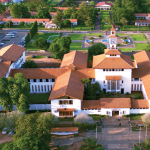


Newly graduated PhD students at the University of Ghana are calling for greater transparency and reforms to what they describe as an “opaque” doctoral examination process.
The concerns were raised during the first congregation ceremony for the 2024/2025 academic year, held on Tuesday, February 10, 2026, at the Great Hall, where Doctorate and Master’s degrees were conferred.
Speaking to Univers News, several graduates expressed frustration over limited information flow during the thesis examination stage, as well as gaps in supervision.
One graduate highlighted concerns about the handling of external examiners, explaining that students are left in the dark once their theses are submitted.
“The most critical part is information flow. An important portion of the process is when you submit your thesis; it’s supposed to go to external examiners. However, the student does not know who these external examiners are and cannot follow up with them. It is left largely in the hands of the administrative staff in the various schools and possibly your lead supervisor, but there is an extent to which they can go.”
He questioned why the identity of examiners should remain confidential, suggesting that the University adopt a more collaborative model similar to practices in other institutions globally.
“You are the student; you want to graduate. I really don’t see why that should be a secret. In fact, in other schools around the world, your examiners are not secrets. You know them. Sometimes you even participate in deciding who your examiners are because, at this level, it’s more collegiate than a student-teacher relationship.”
Another graduate called for better communication of the PhD handbook to prevent prolonged completion timelines.
“We do have a PhD handbook which regulates the processes, and I believe we need a lot more communication and sensitization of students on its content—what is to happen at which point in time. This is crucial so that people can graduate on time,” he suggested.
Some graduates noted that candidates can spend seven, nine, or even over a decade in the system due to procedural delays. Others suggested that the University intervene when examiners become unresponsive.
“Let it be open so you know who is marking your thesis. The process should be a little more flexible. If you don’t hear from an examiner for at least a month, the school should be able to follow up or change the examiner if they are too busy, especially since they don’t allow the student to follow up themselves.”
Despite these systemic challenges, many graduates acknowledged the personal growth that comes with completing a PhD. One shared that the research process, though demanding, was ultimately rewarding.
“The most challenging part for me was the entire research process—collecting the data and making sense of the analysis. I thought of getting help initially, but I’m happy I didn’t. No one else understood how I wanted the data analyzed. I had to go back to the literature and learn to do it myself. That is the whole focus of a PhD: doing it yourself and learning from it.”
Responding to concerns about supervision, Professor Mahmoud Abdulai, Head of the Department of Marketing and Entrepreneurship at the University of Ghana Business School (UGBS), emphasized that supervision is a partnership between the student and mentor.
“Supervision is a partnership between the supervisor and the student. Once the student is up to the task, the supervisor’s work becomes less tiring. But when you have a student who is dragging his or her feet, it makes the work difficult. It depends on the type of student you have,” he explained.
He added that supervisors are expected to remain accessible throughout the doctoral journey.
“The supervisor is supposed to make themselves available all the time when the student needs them. Once you are available to address their challenges and give them the direction they need, I think the journey is smooth,” he added.
While the congregation celebrated academic achievement, the concerns raised by graduates highlight ongoing debates about transparency, communication, and efficiency within the University’s doctoral examination system.
–
Story by Wilhemina Dushie | univers.ug.edu.gh
Edited by Erica Odeenyin Odoom