

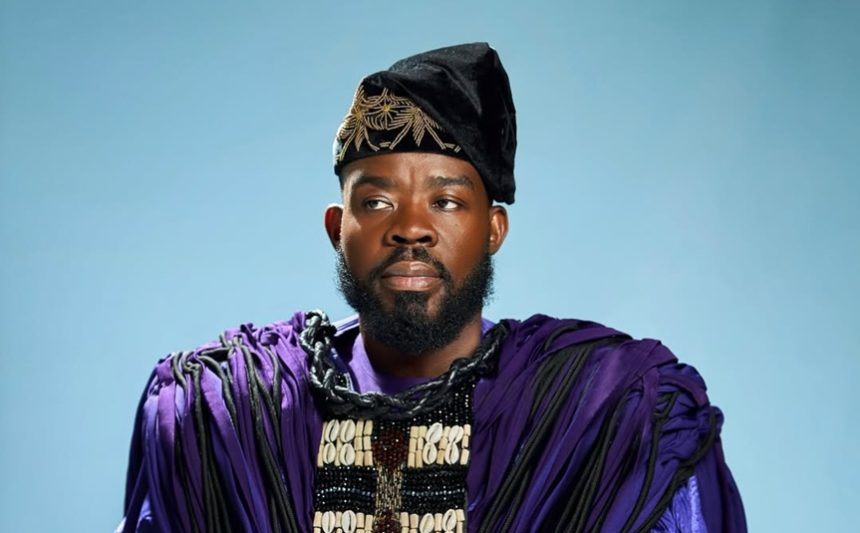
Ghanaian businessman Richard Nii Armah Quaye has attributed the collapse of his marriage to the pressures that accompanied his financial success, describing himself as “a victim of his own success.”
Quaye made the remarks during an appearance on The Delay Show with media personality Deloris Frimpong Manso, where he spoke about his marriage to his ex-wife, Joana Quaye, which ended in 2020 after nearly a decade together.
“We were married for 10 years. Our marriage broke down just months into our 10th anniversary,” he said. “For nine years, I was happily married. I thought my marriage was going to last for the rest of my life.”
“I am really of the opinion that I lost my marriage because of my success. I was a victim of my own success… The moment you make money, you begin to have issues about your security… And then loyalty becomes a problem. People around you begin to change, and you don’t know who genuinely loves you anymore.”
Influence of close relationships
He described how wealth can attract individuals with ulterior motives, creating what he referred to as “scavengers” and “parasites” within one’s circle.
Quaye, president of RNAQ Holdings, also pointed to the role of a close associate he had treated like a brother, suggesting that the relationship may have contributed to tensions within his marriage.
He explained that the individual, a childhood friend, moved into his home and became deeply integrated into his personal life.
“I gave him everything—accommodation, a car, a job. Anywhere you saw me, you saw him,” he said, adding that in hindsight, the decision “was a wrong one.”
While he declined to provide full details, he indicated that the situation had a significant impact on his marriage.
Quaye, however, maintained that he did his best to save the marriage, but said it appeared the other party had already decided to exit.
Respect for ex-wife, rejection of cheating claims
Despite the breakdown, Quaye spoke respectfully about his former wife, noting that she remains the mother of his children.
“I still have maximum respect for her,” he said. “She was my first girlfriend. We spent almost 10 years together—those are great memories.”
Addressing allegations that have circulated online, Quaye denied claims of infidelity.
“My wife never caught me cheating,” he said. “For the 10 years we were married, there was not a day I didn’t sleep at home. Whenever I was in Ghana, I slept at home.”
He maintained that external pressures and influences—rather than extramarital relationships—were the primary drivers of the separation.
Background to the divorce controversy
Quaye’s remarks come amid renewed public interest in his divorce, which has evolved into a high-profile legal dispute in recent years.
The marriage was formally dissolved by an Accra High Court, with a ruling delivered in January 2026 that outlined the distribution of marital assets and custody arrangements.
Under the ruling, Joana Quaye was awarded a financial settlement, a share of property, and custody of the couple’s children, though the decision has since been challenged.
She has filed an appeal seeking a more equitable distribution of assets acquired during the marriage, arguing that the initial judgment did not adequately reflect her contributions.
The case has also drawn wider commentary from legal observers and advocacy groups, highlighting broader debates around marital property rights and judicial reasoning in Ghana.
Taking responsibility
Quaye emphasised that he does not place blame on his ex-wife for the breakdown of the marriage, stressing his belief in personal accountability.
“I don’t blame anybody for the bad things that happen to me,” he said. “There is always something I could have done differently.”
He added that although efforts were made to resolve the issues—including family interventions—the challenges ultimately proved insurmountable.
“I thought it was one of those normal marital issues we could resolve,” he said. “But I later realised it was more serious.”
A complex and evolving narrative
Quaye’s comments add to an ongoing public conversation that blends personal testimony with an active legal process.
While he has declined to disclose specific details of the breakdown, his account frames the end of the marriage within the broader pressures of wealth, changing relationships, and personal responsibility—issues that continue to resonate as the legal aspects of the case unfold.
Watch the full interview below.