
The Ghana Space Science and Technology Institute (GSSTI) has deployed remote sensing technology to assess the impact of illegal mining on the country’s forest cover, with findings expected to guide government policymaking.
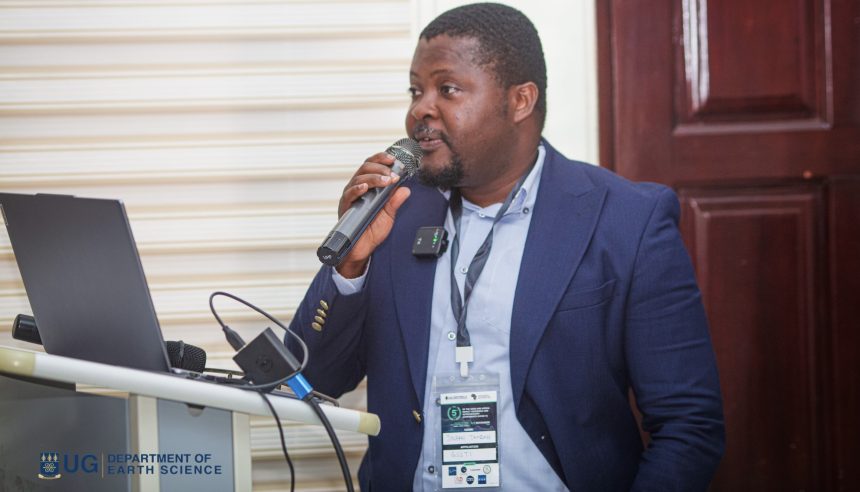
Dr. Joseph Breman Tandoh, Director of GSSTI under the Ghana Atomic Energy Commission, made this known at the 5th Arab and Africa Impact Cratering and Astrogeology Conference held at the University of Ghana.
Delivering his address as Guest Speaker, Dr. Tandoh said the Institute relied on satellite imagery and remote sensing tools to monitor the extent of forest destruction linked to galamsey activities. The assessment, conducted between 2007 and 2024, focused on major mining zones across the country and showed that more than 60,000 hectares of forest cover had been lost.
“Satellite imagery revealed that close to 60,000 hectares of land have been destroyed by illegal mining, particularly in the Ashanti, Western North, and Eastern regions,” he said. “This level of degradation poses severe long-term threats to the country’s environmental sustainability. We hope these findings prompt immediate and remedial action from the relevant authorities. Scientists have a duty to provide verifiable, real-time data that supports effective policymaking.”
Dr. Tandoh stressed the need for stricter government policies requiring all stakeholders operating in forest areas to replant trees to restore ecological balance.
He commended the Green Ghana initiative but cautioned that it should not become “a yearly ritual” without effective monitoring structures. He called for accountability mechanisms to track how resources are used and to verify where state-procured seedlings are planted.
“Monitoring the growth and development of planted trees will help instil a culture of environmental care and sustainability among all participants,” he added.
The conference brought together researchers and academics from Europe, Asia, Africa, and global development partners in climate science and technology. Discussions focused on translating new scientific developments into policy and developing innovative solutions for environmental challenges across the continent.
–
Story by Sika Togoh | univers.ug.edu.gh
Edited by Gabriel Tecco Mensah