

The Government of Ghana has announced plans to transform the country’s education sector through extensive infrastructural development and improved learning resources.
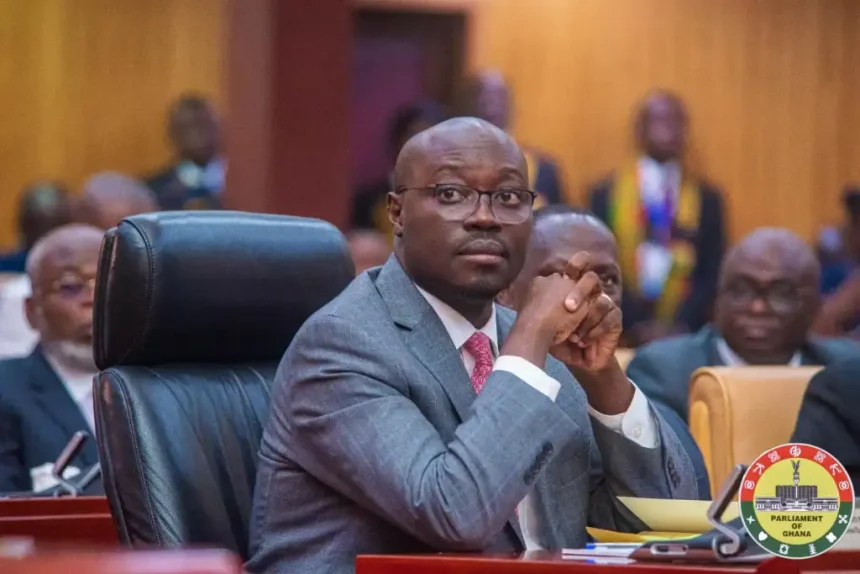
Presenting the 2026 Budget Statement and Economic Policy in Parliament on Thursday, November 13, 2025, Finance Minister Dr. Cassiel Ato Forson revealed that the government is now prioritizing basic education after years of heavy focus on the secondary level.
“Basic education has been neglected due to over-concentration on secondary education. Government has decided to enhance infrastructure and the provision of textbooks at the basic level. In this regard, government will construct 200 new junior high schools, 200 new primary schools, 200 kindergartens, 400 four-unit teachers’ bungalows, and 400 places of convenience in underserved communities. Each of these facilities will be fully furnished,” he stated.
Dr. Forson further disclosed that the Ghana Publishing Company Limited (GPCL) will be responsible for printing all textbooks required for basic education.
“Government will provide free, comprehensive, curricula-based textbooks, including four sets of KG books and workbooks for about 1 million learners, four sets of primary textbooks for 2 million learners, and nine sets of JHS 3 textbooks for 1 million learners. The Ghana Publishing Company will be mandated to print these textbooks,” he stated.
Addressing one of the most debated issues in secondary education, the Finance Minister announced a plan to eliminate the double-track system, which was introduced to manage increased enrolment under the Free SHS policy.
“The Free SHS policy has led to unprecedented enrolment growth, but it has also stretched our facilities to their limits. Many schools are overcrowded, and others lack the infrastructure or resources to deliver quality education. To address this, government is implementing the Ghana Secondary Learning Improvement Programme (GSLIP)—a two-year national initiative running from 2026 to 2027,” he noted.
“We will expand infrastructure, enhance quality, and improve access. This initiative will eliminate the double-track system and ensure that every child can attend school full-time, in dignity and safety,” he added.
The announcement has been welcomed by education stakeholders, who view it as a major step toward improving learning outcomes and easing pressure on overcrowded schools.
—
Story by Oliver Arthur Acorlor | univers.ug.edu.gh
Edited by Gabriel Tecco Mensah