

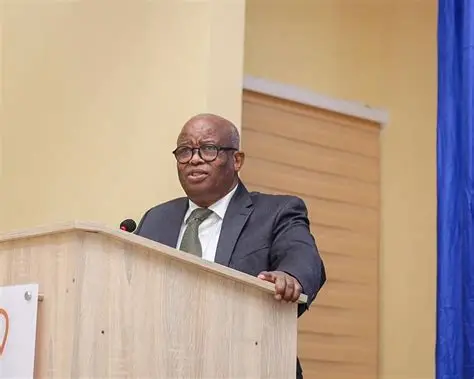
Renowned epidemiologist and keynote speaker at the opening day of the 2026 West African Centre for Cell Biology of Infectious Pathogens (WACCBIP) Research Conference, Professor Fred Binka, has called on African governments to increase investment in the training of specialised personnel in biological sciences to strengthen disease research and improve health outcomes.
He said developing more skilled researchers would enable African countries to conduct timely research into disease burdens and better understand how environmental factors affect the health of their populations.
Delivering the keynote address at the conference, held from July 29 to July 31, 2026, Prof. Binka also advocated for the integration of research scientists from academic institutions such as WACCBIP and other centres of excellence into national health policy and planning processes.
He said doing so would allow governments to draw on local scientific expertise in developing evidence-based policies and strategies for disease prevention and control.
“In the field of disease control and prevention, biologists and cell research scientists play a critical role in understanding the human body and how it functions in terms of processing what goes into the system and its effects on how the human anatomy functions to promote health and wellness.
“There is a need for the state to place sufficient value on the work those professionals do in the healthcare ecosystem that quietly supports the science and technology that build a very robust medical system capable of predicting human reactions to materials that can cause a breakdown, leading to disease conditions over time,” he said.
He further called for a more coordinated approach to incorporating biological and research scientists into the healthcare system and relevant regulatory institutions.
“I advocate that more coordinated approaches must be developed by the state actors to rope in more of these professionals in significant numbers across the healthcare value chain and in regulatory bodies like the Food and Drugs Authority, the Standards Authority and other allied agencies to be able to tap into the excellent work of world acclaimed bodies like WACCBIP to shape national health policies for sustainable long-term impact using locally trained scientists,” he added.
Prof. Binka also urged the government to leverage the Ghana National Research Fund to identify critical gaps in science and technology and provide adequate funding for research and training in partnership with local universities.
“In the light of the contemporary changes in the field of science and innovation the world over, I surmise that the time is ripe for the government to leverage on the newly minted Ghana National Research Fund to identify the human resource gaps in particular the science and research field and put in enormous monetary resources to support the activities of centres of excellence such as WACCBIP and other allied entities that are committed to training the next generation of world class local scientists that can come out with innovative solutions to the challenges that bedevil the holistic development of African healthcare delivery and its disease prevention ecosystem,” he stated.
According to him, increased investment in local research institutions would also help reduce the resources spent on training medical and scientific professionals abroad while strengthening local capacity.
“That initiative will go a long way to save scarce resources that are shipped out to train medical professionals in Western institutions abroad rather than investing the same in local academic and health facilities back home to develop local expertise by building the capacity to transform theoretical concepts into workable real-world solutions,” he said.
The 2026 WACCBIP Research Conference, held under the theme “African Bioscience at the Interface of Health, Disease and the Environment,” brought together researchers from the University of Ghana, Kwame Nkrumah University of Science and Technology, as well as partners from Ghana and abroad.
The three-day conference provided a platform for researchers and other stakeholders to discuss issues related to health, disease and the environment, with a focus on using evidence-based research to inform policy and strengthen healthcare delivery across Africa.
–
Story by Sika Togoh | univers.ug.edu.gh
Edited by Erica Odeenyin Odoom