
Football has a funny way of making 90 minutes feel like a lifetime.
For weeks, the world stopped to watch 48 nations chase one dream. There were tears in the stands, celebrations in the streets, goals that will be replayed for years and defeats that will take even longer to forget.
Then, on July 19, it was over.
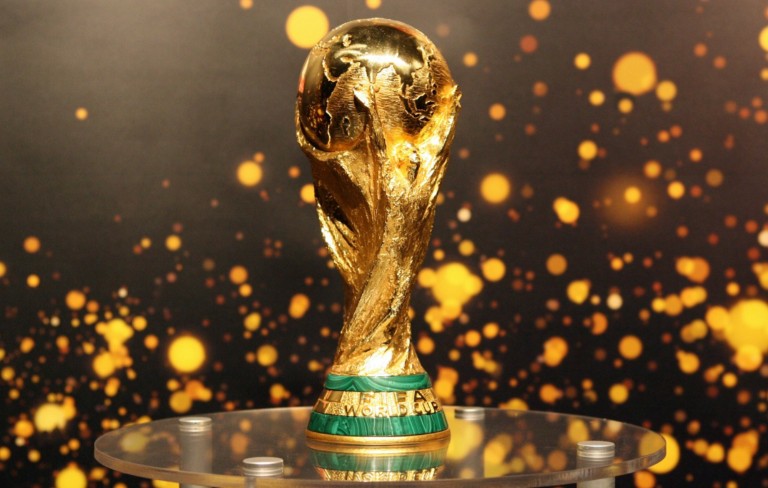
Spain were world champions. Argentina were no longer the kings of world football. The trophy had changed hands, but the arguments had only just begun.
Because the 2026 FIFA World Cup was never just about who would lift the trophy.
It was about the decisions that left fans shouting at their screens. It was about VAR reviews that turned celebrations into confusion. It was about politics entering football’s biggest stage, the rise of new footballing powers, the fall of traditional giants and the question of whether the beautiful game is becoming too big, too commercial and too complicated for its own good.
It was also about history.
A 48-team World Cup opened the door for more nations to dream. Underdogs arrived with little to lose and left with the world’s attention. Established giants were reminded that reputations do not win football matches.
Africa was once again forced to confront the question of whether its footballing progress is real or whether exceptional teams remain exceptions.
And then there was Lionel Messi.
The man who had already completed football’s greatest story in 2022 returned for one more chapter. But this time, the ending was different.
Spain stood in the way.
When Ferran Torres’ extra-time goal settled the final, Spain had their second World Cup title. Argentina had lost the crown they had fought so hard to defend. And for Messi, another chapter of an extraordinary international career appeared to have reached its final page.
But even after the final whistle, the 2026 World Cup refused to go quietly.
From controversies surrounding refereeing and VAR to the extraordinary dispute over Folarin Balogun’s suspension, from questions about FIFA’s independence to the post-final fallout, the tournament produced enough drama to keep football fans talking long after the players had left the pitch.
As the dust settles on the biggest World Cup yet, one question remains:
What will we actually remember about 2026?
The trophy?
The controversies?
The surprises?
Or the moments that made the world stop and say: “Did that really just happen?”
When technology became the villain
VAR was introduced to make football fairer.
But at the 2026 World Cup, technology once again found itself at the centre of the argument.
For every fan celebrating a correct decision, another was left asking why a goal had been ruled out, why a penalty had not been awarded or why a referee needed several minutes to make a decision that once would have taken seconds.
The debate was no longer simply about whether a decision was right or wrong.
It was about whether supporters still trusted the process.
The controversy surrounding Argentina’s match against Egypt became one of the tournament’s most discussed refereeing episodes. Egypt saw a goal ruled out after a VAR review, while questions were also raised over a penalty appeal involving Mohamed Salah.
For Egypt, it was a frustrating night. For Argentina, it was another step towards the final.
And for football fans watching from around the world, it was another opportunity to ask the question that has followed VAR since its introduction:
Has technology actually reduced controversy—or has it simply changed the way controversy looks?
The problem is that football is a game built on emotion. A goal is supposed to be a moment of pure joy. But at the World Cup, fans increasingly found themselves waiting.
Waiting for the referee.
Waiting for VAR.
Waiting for the screen.
Waiting to find out whether they were actually allowed to celebrate.
Technology may have made some decisions more accurate, but the 2026 tournament showed that accuracy and acceptance are not always the same thing.
The decision that put politics on the pitch
Few moments captured the uneasy relationship between football and politics quite like the controversy surrounding Folarin Balogun.
The United States forward’s disciplinary case became a major talking point after FIFA suspended his automatic one-match ban following intervention from U.S. President Donald Trump.
FIFA maintained that its judicial bodies were independent.
But the decision drew criticism from UEFA President Aleksander Čeferin and raised a much bigger question about the sport’s governing structures.
If football’s rules are supposed to apply equally to everyone, should political leaders have any influence over the disciplinary process?
The Balogun controversy was no longer simply about one player.
It became a debate about power.
And perhaps, more importantly, about who really makes the rules in world football.
The controversy also contributed to wider tensions between FIFA and UEFA, with Čeferin reportedly absent from the World Cup final amid disagreements with FIFA.
For a sport that often insists that football and politics should remain separate, the 2026 World Cup provided a reminder that keeping the two apart is not always so simple.
Africa’s big question: Has the gap finally closed?
Morocco’s historic achievements in 2022 had already changed perceptions of what an African team could achieve. The 2026 World Cup provided another opportunity to test whether that progress was becoming a pattern rather than an exception.
And this time, Africa arrived with more representation than ever before.
With nine automatic qualification spots and the possibility of a tenth place through the inter-confederation play-off, the continent had a historic opportunity to make an even bigger statement on football’s biggest stage.
Interestingly, nine of Africa’s ten representatives booked their places in the Round of 32.
For a moment, it felt like this could finally be Africa’s World Cup.
Then came the heartbreak.
Just when it felt like the continent’s fortunes were about to change, only two teams—Morocco and Egypt—managed to progress beyond the Round of 32.
The painful part was not simply that seven African teams were eliminated.
It was how they were eliminated.
The seven teams suffered a series of heartbreaking collapses, late game-winners and agonising extra-time exits. For some, victory was within touching distance before everything fell apart. Leads were surrendered. Defences crumbled at the worst possible moments. And goals that came in the dying minutes turned celebration into devastation.
And then there was Senegal.
Perhaps, of all the African exits, theirs was the one that hurt the most.
The Lions of Teranga looked to have one foot in the next round after taking a commanding 2–0 lead against Belgium. Habib Diarra and Ismaïla Sarr had put Senegal in control, and with just five minutes of normal time remaining, it seemed the African side was heading towards a famous victory.
Then, everything changed.
Romelu Lukaku pulled one back in the 86th minute.
Three minutes later, Youri Tielemans equalised.
Just like that, a 2–0 Senegal lead had become 2–2.
The game went into extra time, and Senegal somehow held on. With penalties seemingly approaching, there was still one final twist.
Deep into stoppage time, a VAR review led to a penalty being awarded to Belgium after Lamine Camara’s challenge on Tielemans. Tielemans stepped up and scored, completing Belgium’s extraordinary 3–2 comeback and sending Senegal crashing out.
From 2–0 up with five minutes of normal time left to being eliminated in extra time.
Football can be cruel.
For Senegal, it was not simply a defeat. It was a collapse that happened in slow motion, right before the eyes of a nation that had dared to believe.
Oh, Africa.
Think of Ivory Coast.
Think of DR Congo.
Think of South Africa.
But then think of Senegal.
I wonder how people in Dakar felt that day. I would never want to put myself in their position.
The heartbreak was not just in losing. It was in how close Senegal had come to winning.
They had the lead.
They had the momentum.
They had the dream.
And then, in the space of a few minutes, it disappeared.
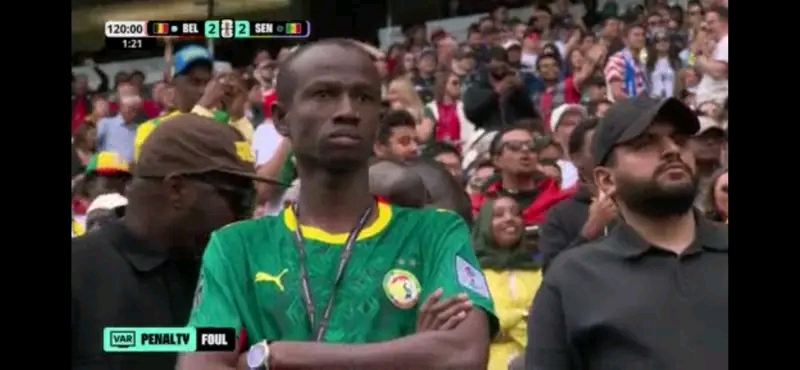
For African fans watching across the continent, Senegal’s defeat felt like another painful reminder of how unforgiving the knockout stages can be. The smallest lapse, the latest goal or one moment that goes against you can erase months, even years, of hope.
And perhaps that is why Senegal’s exit stays with me the most.
Because sometimes, the most painful defeats are not the ones where you were never close.
They are the ones where you could almost touch victory.
Is African football genuinely closing the gap with Europe and South America—or are we still celebrating individual success because sustained continental success remains elusive?
For African fans, the answer matters.
Because the dream is no longer simply to participate.
The dream is to compete.
And eventually, to win.
The performances of African teams therefore carried a significance that went beyond individual results. Every victory was another argument against the old perception that African teams could produce surprises but could not consistently challenge the world’s best.
But one successful campaign is not enough to change an entire football system.
The challenge for Africa is to turn moments of brilliance into sustained progress.
And perhaps the 2026 World Cup showed us both sides of that reality.
On one hand, having nine of Africa’s ten representatives reach the Round of 32 was a huge achievement. It showed that African teams are no longer simply arriving at the World Cup to make up the numbers. They are competing, winning matches and earning their places in the knockout stages.
But on the other hand, what happened next was painful.
Just when it felt like Africa could finally make a collective statement, seven of those nine teams were eliminated.
And not all of them went quietly.
Some were undone by late goals.
Some surrendered leads when victory appeared within reach.
Others were forced into extra time, only to see their dreams disappear in the cruelest way possible.
Maybe Africa is getting closer.
Maybe the gap really is closing.
But until an African nation lifts the World Cup trophy, there will always be another question waiting:
When will Africa’s moment finally come?
The giants fell, and the underdogs roared
One of the reasons the World Cup remains football’s greatest stage is simple: history does not always matter.
Rankings do not matter.
Reputation does not matter.
For 90 minutes, sometimes 120, everyone starts again.
And the 2026 tournament offered several reminders of that.
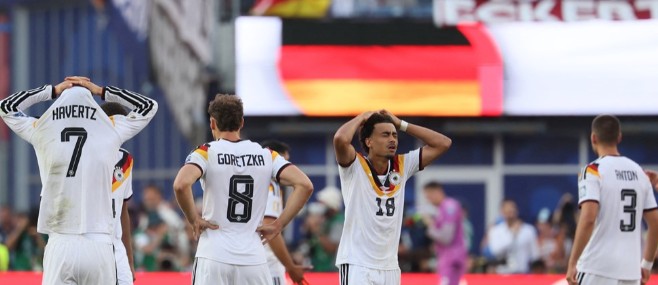
Germany, one of the most decorated teams in World Cup history, saw their campaign come to an end in dramatic fashion against Paraguay in the Round of 32.
After a 1–1 draw that lasted 120 minutes, Paraguay held their nerve in the penalty shootout to win 4–3 and send the four-time champions crashing out of the tournament.
It was another reminder that the World Cup does not respect reputations.
The name on the shirt can be famous.
The history can be glorious.
But once the whistle goes, none of that guarantees a place in the next round.
Germany’s exit was part of a broader story that played out throughout the tournament. Established footballing powers were challenged, while teams with less history on the world stage played without fear.
The underdogs did not arrive simply to make up the numbers.
They arrived believing they belonged.
And perhaps that is one of the strongest arguments for the expanded 48-team format.
More teams meant more opportunities.
More stories.
More dreams.
More chances for nations that may not have traditionally been considered World Cup favourites to stand on the biggest stage and say: “We belong here too.”
But critics had their own question:
Did FIFA expand the World Cup for the love of the game—or because more teams also mean more matches, more television rights and more commercial revenue?
Perhaps the truth is somewhere in between.
But watching the underdogs step onto the same pitch as the giants made one thing clear: sometimes, the most powerful story in football is not the team that was expected to win.
It is the team that dared to believe it could.
The final that closed one chapter and opened another
And then came the final.
Spain against Argentina.
The new generation against the reigning champions.
A team chasing its second World Cup against a nation trying to keep hold of the crown.
For Argentina, it was about defending the legacy of 2022.
For Spain, it was about creating a new one.
The final itself was a tense battle that eventually stretched beyond 90 minutes.
Then came the moment that changed everything.
Ferran Torres found the decisive goal in extra time.
Spain were champions.
Argentina were left to wonder what might have been.
And somewhere in the middle of it all stood Lionel Messi.
The 2026 World Cup was always going to be about him.
Perhaps no other player carried such a heavy narrative into the tournament. He had already conquered the one prize that had eluded him. Now, he returned as the defending champion, attempting to extend a story that many believed had already reached its perfect ending.
But football rarely gives us perfect endings twice.
Spain’s victory ensured that Messi’s final World Cup would not end with another trophy.
Instead, it ended with another reminder of why football is so compelling.
Even the greatest players cannot control the ending.
And perhaps that is what makes Messi’s World Cup story so remarkable. He leaves the competition not simply as a champion of 2022, but as one of the defining figures of an era.
The trophy may belong to Spain now.
But Messi’s place in World Cup history remains.
And then there was Cristiano Ronaldo.
For years, the debate has followed these two names everywhere.
Messi or Ronaldo?
Who is the greatest of all time?
For some, the argument was simple: until Messi lifted the World Cup in 2022, Ronaldo had the advantage in almost every other conversation. For others, Messi’s World Cup triumph finally settled the debate.
But I am not here to decide who is the best.
I would rather leave that argument to football lovers.
Because perhaps that is what makes sport worth watching in the first place.
The arguments.
The rivalries.
The endless debates over who was better, who achieved more and who left the bigger legacy.
And in 2026, Ronaldo came fighting for one more chance to write his own ending.
He came with the same dream every player carries into a World Cup: to win it for his country.
But standing in his way was Spain.
Maybe Spain were simply destined to win this World Cup.
Because no matter how many stories unfolded around them, no matter how many conversations were dominated by Messi, Ronaldo, controversies or surprise results, Spain kept moving forward.
Perhaps that was their greatest strength.
While the world was busy watching the legends, Spain were quietly writing their own story.
Then, when it mattered most, they stood between Ronaldo and the ending he had spent his career chasing.
Football can be cruel like that.
Sometimes, you can fight with everything you have and still find yourself on the wrong side of history.
For Ronaldo, the World Cup dream ended without the trophy.
For Spain, the final whistle marked the beginning of a new era.
And perhaps that is the beauty of football.
One legend’s chapter closes.
Another team’s story begins.
The debate between Messi and Ronaldo will continue long after both men have left the pitch.
And honestly, I hope it does.
Because as long as football lovers are still arguing about who was the greatest, the sport will always have something to talk about.
When the final whistle wasn’t really the end
Normally, the final whistle ends the World Cup.
This time, it only opened another chapter.
The aftermath of the final brought its own controversies, with incidents involving players becoming the subject of FIFA’s disciplinary processes.
The tournament may have ended on the pitch.
But the arguments surrounding it continued off it.
And perhaps that is fitting for a World Cup that had spent an entire month reminding us that football is never just football.
The decisions made by referees.
The decisions made in boardrooms.
The influence of politics.
The reaction of fans.
The behaviour of players.
Everything becomes part of the story.
So, was this the greatest world cup yet?
That may be the hardest question to answer.
The 2026 World Cup was bigger than any World Cup before it.
It had 48 teams.
It produced new heroes and unforgettable moments.
It gave fans more football than ever before.
But bigger does not always mean better.
The tournament also left behind uncomfortable questions.
Questions about VAR.
Questions about political influence.
Questions about the independence of football’s institutions.
Questions about commercialisation.
Questions about whether the game is becoming more difficult for ordinary fans to access.
And questions about whether football’s governing bodies are prepared to deal with the enormous power they now hold.
Perhaps that is the real legacy of the 2026 World Cup.
Spain will have the trophy.
The players will have their medals.
The records will be written into history.
But for the fans, the tournament will be remembered differently.
They will remember the goal that made them scream.
The decision that made them angry.
The upset that nobody saw coming.
The player who became a hero.
The player who became a villain.
And the moment when, for just a few seconds, the entire world was watching the same thing.
As a young girl who has always loved sports and is growing even more passionate about football, I think that is what makes this game so special. There is always another story to tell, another moment to debate and another reason to fall in love with the sport all over again.
Because that is the strange magic of the World Cup.
It gives us football.
But it also gives us something to argue about long after the football is over.
–
Story by Erica Odeenyin Odoom | univers.ug.edu.gh