
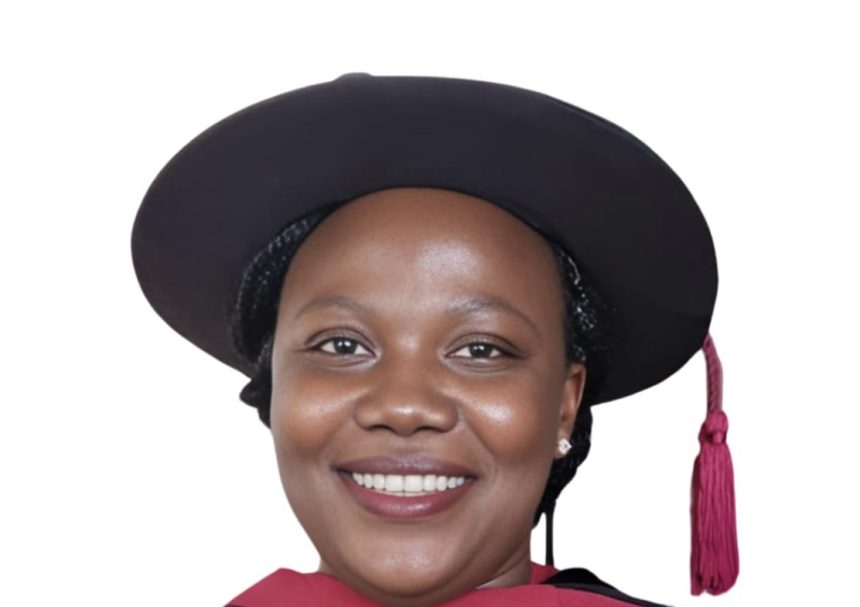
Associate Professor of Information Science at the Department of Information Studies, University of Ghana, Monica Mensah Danquah, has called on libraries to adapt to the changing needs of society and play a more active role in addressing social challenges.
Her comments come amid changing perceptions about the relevance of libraries in an increasingly digital environment, where information is readily available through the internet and other digital platforms.
Speaking on The Public Sphere on Radio Univers, Prof. Mensah Danquah explained that libraries can serve as safe and accessible spaces where individuals and communities can find resources, guidance and support to address challenges affecting their daily lives.
“One thing that we haven’t looked at is the role that libraries can play. Libraries are safe places. When you come to Africa and especially in Ghana, realize that we have the library system that is spread across various regions.”
“So it means that if we are looking for any entity or any facility that you can find anywhere in Ghana, it is the library. So therefore, when it comes to school-related violence, research has shown that there are a whole lot of issues that bring about school violence. Some of them, especially in Africa, could relate to even the students not having the opportunity to speak to others when they are troubled or even when somebody is trying to bully them,” she added.
Prof. Mensah Danquah further explained that libraries can provide safe spaces for students and communities, regardless of their background, and can potentially serve as points of intervention for school-related violence.
“But research has also shown that libraries could act as places of intervention for school-related violence. How? When people are in the library, they are safe because the library is for everybody. We do not discriminate whether you are whatever, you can use the library,” she noted.
She also highlighted the quiet and welcoming nature of libraries, noting that these qualities can make them suitable spaces for students to learn, seek someone to talk to and manage tensions.
“Now, when you come to the library, you know we have the African syndrome. As always, the African child needs the third person syndrome, the third person to talk to. And that third person literature has shown that libraries could do that. Usually, noise can create violence in people because noise releases a certain chemical called cortisol. Cortisol can raise tensions. So the libraries are very quiet places.”
“So there are a lot of things that libraries can do to actually mitigate school-related violence. When you are in the library and you are even learning, when you have books and you are concentrating on them, would you go to do a luta? But the libraries have to be safer for them. It has to be attractive for them to come to,” she said.
She further noted that libraries can also function as community-based innovation hubs, providing opportunities for people to identify challenges within their communities and develop practical solutions.
“I dream about libraries as an innovation hub. So if it’s an innovation hub, then what things can we do to bring about innovation? Libraries are already doing them. Libraries are organizing orientations so people could go to libraries and could have orientation on what to do,” she added.
Prof. Mensah Danquah maintained that libraries must move beyond their traditional role as places for accessing books and information and become more responsive to the social, educational and developmental needs of the communities they serve.
–
Story by Munaya Shamsiya | univers.ug.edu.gh
Edited by Erica Odeenyin Odoom