

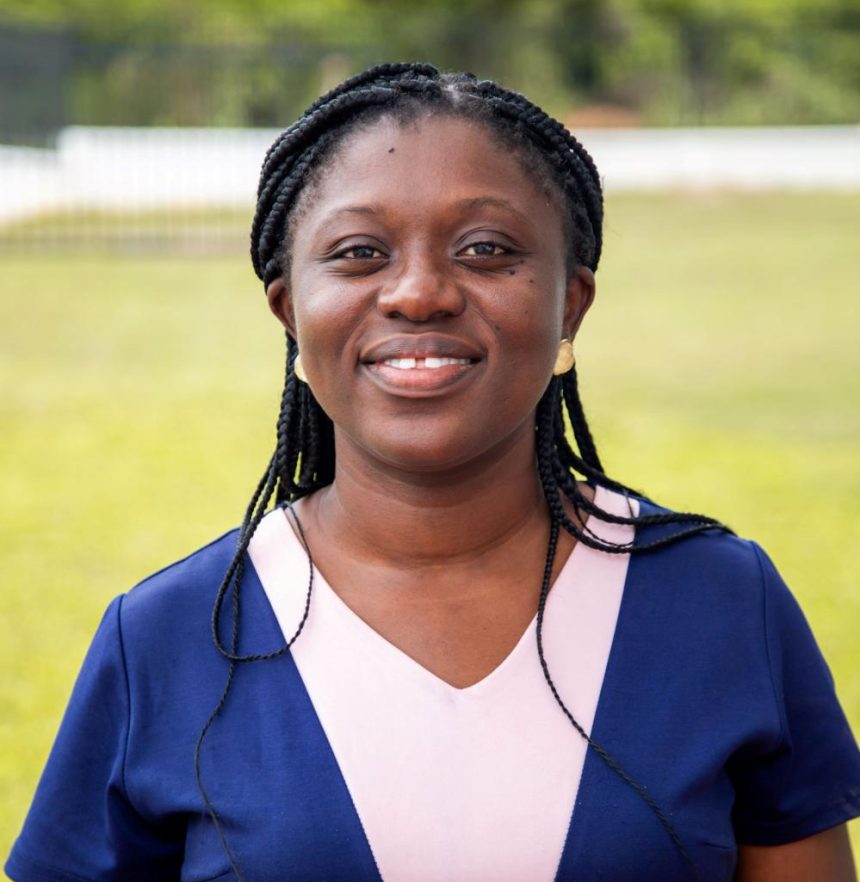
In anticipation of World Teachers’ Day, celebrated annually on October 5, Educational Psychologist and Research Fellow at the Legon Centre for Educational Research and Policy (LECERP), Dr. Freda Osei Sefa, has revealed that Ghana lacks clear policies and strategic frameworks to guide the use of Artificial Intelligence (AI) in education.
She made this remark ahead of LECERP’s celebration of the day on Monday,6th October, 2025 under the theme “Beyond Chalkboards: AI Usage, Dyslexia Awareness, and Teachers Driving Change.”
The programme will feature an interactive session with teachers and education officers within the La Nkwantanang Madina Municipality.
Speaking on Campus Exclusive show on Radio Univers on Friday,October 3, 2025, Dr. Sefa debunked the misconception that AI is set to replace teachers, stressing that the technology should rather be viewed as a tool to support teaching and learning.
She explained that while AI is becoming increasingly influential, Ghana still lacks the right policies to guide its implementation in schools.
“We are making noise about AI. AI is in. It’s here to stay. However, we don’t have the strategic policies and frameworks that will make it work in the country,” she noted.
According to her, many teachers and individuals have misconceptions about AI and are uncertain about its use in the classroom.
“There are so many questions as to why I am supposed to use AI. There are misconceptions that need to be cleared because AI is here to stay,” she emphasized.
Dr. Sefa added that rather than replacing educators, AI should be embraced as a supportive resource to enhance teaching outcomes.
“Many people believe that AI is going to replace teachers. Whenever we have AI set up in a school, some assume the teacher will no longer be needed. But AI is here to support, not to replace teachers,” she explained.
She further noted that AI can assist teachers in identifying children with learning needs, developing lesson plans, and carrying out classroom activities more efficiently.
Turning her attention to parenting, Dr. Sefa urged parents to be more intentional about raising disciplined and value-driven children.
“We need parents to be present — to see to their children, spend time with them, and engage them. Some parents say they are overwhelmed or too busy, but whatever effort you put in today will pay off in the future,” she stated.
She added that effective parenting requires conscious effort and commitment.
“We have to go back to our parenting strategies and train our children well. It won’t just happen; parents must intentionally make time and prepare their children for the future,” she advised.

Meanwhile, Population Health Scientist and Research Fellow at LECERP, Dr. Martin Wiredu Agyekum, has highlighted the importance of early detection of dyslexia to ensure timely intervention for affected learners.
He explained that early identification of the condition would help teachers and parents provide the right support to such children.
“If we’re able to identify this condition at an early stage, we can develop interventions to assist both parents and teachers on how to handle such students,” he noted.
Dr. Agyekum also emphasized the need for awareness creation among teachers, especially as Ghana promotes inclusive education.
“We’re teaching 60 students in a class — some with disabilities or learning difficulties — and without awareness, such students are often tagged as unintelligent. But it’s something preventing them from performing well,” he explained.
He added that equipping teachers to identify and support such students would ensure that all learners receive equal opportunities.
“Once we identify these students, we can provide timely care and use assistive technologies to help them learn and excel,” he concluded.
The LECERP World Teachers’ Day event seeks to promote awareness about AI integration in education, strengthen inclusive teaching practices, and empower teachers to embrace technological innovation responsibly.
–
Story by: Dontah Irene Naapog| univers.ug.edu.gh
Edited by Erica Odeenyin Odoom.