
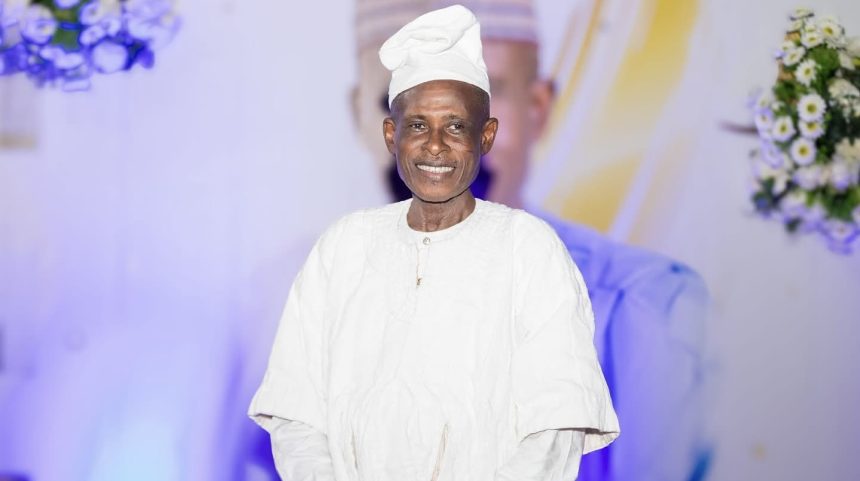
I gave him a call on Wednesday, February 16, 2026, but only got a feeble response. As it turned out, Alhaji Sidick Ahmed had been hospitalized and only managed to receive my call. Was he on his way to his Maker? I calmly assured him I would pay him a visit… but it was too late. The day after, news of his tragic departure was all over the airwaves.
Sidick Ahmed and the University of Ghana as a whole played a pivotal role in freeing the airwaves on the eve of Ghana’s Fourth Republic. Hand in hand with Alhaji, we started Radio Univers in the early 1990s on the initiative of Vice-Chancellor George Benneh. We were Benneh’s foot soldiers: I, the ubiquitous Dean of Students, and Alhaji as Station Manager. After Benneh came another great radio enthusiast, Vice-Chancellor Addae-Mensah.
Using the School of Communication Studies as our technical base, the SRC and the student body as our volunteer force, we pushed on—tripping, fumbling, but always rising to resume the struggle. Fair weather soon returned to wipe our tears.
Over a period of twenty-five years, life moved on; various streams of students passed through our experimental Univers; changing scenes of management and staff passed with fond memories.
One thing, however, remained constant: Alhaji Sidick Ahmed—the cornerstone: humble, diligent, affable, loyal, principled. Sidick declined several offers to leave Univers for greener radio pastures; prosperity would not move him. He stayed put, even when I had moved on to eventually become Pro–Vice-Chancellor nearly fifteen years later.
In 2009, we nearly lost Alhaji to a serious ailment while he was doing his doctorate in South Africa, which required surgery. Legon’s Vice-Chancellor, Tagoe, did not abandon him. The University’s modest assistance was topped by a philanthropist, enabling him to receive specialist medical attention in South Africa. Later that year, Vice-Chancellor Cliff Tagoe directed me to follow up on Alhaji and check his progress.
Together with the Senior Medical Officer, Dr. Phina Blankson, we visited Alhaji at a hospital in Johannesburg and found him doing well. Alhaji was still cheerful, his silky voice unscathed.
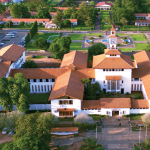
Our most recent encounter was in 2025, at the 30th anniversary of Radio Univers, when the University held court at the base of the Ivory Tower and honored the man who braved the storm and became the Voice of Legon.
Find below excerpts of my reminiscences at Radio Univers @30, even as I bid farewell to a lost jewel.
Radio Univers @30
The story draws listening ears—an adventure that walks you back to the genesis of democratic radio. I pick on it today because Alhaji Sidick and I were pivotal players who staked it out with student heroes to berth Ghana’s Fourth Republic.
Thanks to the visionary Vice-Chancellors of the University of Ghana—George Benneh, followed by Ivan Addae-Mensah—we were their foot soldiers: Kwesi Yankah, Legon’s ubiquitous Dean of Students/Chair of the Foundation Management Board, and my energetic buddy Alhaji Sidick Ahmed, Station Manager.
Late April 2025 was earmarked to celebrate Radio Univers, and we proudly did so at the feet of Ghana’s number-one Ivory Tower, reminiscing how far interactive FM has come after years of fiddling with studio toys. We were “schoolchildren” in the early 1990s, playing games in the Legon studios led by Alhaji Sidick, but unwittingly making history.
That was the early stirring of FM broadcasting, taking over from shortwave radio mustered by GBC 1 and GBC 2. Quietly and gingerly, we hobbled along Ghana’s constitutional democracy, which was on life support. Almost at the same time, Wereko Brobbey’s Radio Eye had quietly started but was shut down by government and its equipment seized. For the records, KNUST and UCC students, using student-made transmitters, were informally operating in their respective neighborhoods.
While the name “Radio Universe” I coined had been unanimously accepted, Aban Korahen, a student volunteer, raised a point of order:
“Sir, the name you have coined for the station is great; but with all due respect, let’s drop the letter ‘e’ at the end of ‘Universe’ and make it ‘Univers’ for purposes of unique branding.”
Brilliant! We applauded and submitted to the young brain. The name and spelling soon stuck and sank into history. We dropped our original generic name, “Voice of Legon,” in 1994 after Vice-Chancellor Benneh bought for us a 400-watt radio transmitter.
We are hereby inciting readers to be angry: the frequency originally given to us by the Frequency Allocation Board was annoyingly hijacked by Joy FM while we were playing in the sand. FM 99.7, which has since been identified with Joy, was ideal—being centrally positioned on the radio wavelength. We ended up with the least favorable frequency, FM 105.7, almost at the end of the dial. The turtle that created the river now lodged at the river’s bank. But we have since allowed bygones to flee, since Joy later atoned by giving big jobs to our little heroes.
A few memorable incidents still linger from our foundation days. First was my early fundraising effort to buy rudimentary studio equipment ahead of the new set of broadcast equipment. Ghanaians on the east coast of the USA got excited learning of the Legon initiative and cooperated when, on a fellowship at Northwestern University, I tried to raise funds. In three weeks, contributions trickling in reached almost $2,000. With this goodwill, I bought basic studio equipment and brought them over as excess luggage. This was to support a 20-watt mono transmitter gifted by UNESCO.
But our new transmitter almost got us into trouble. Our station had been licensed to operate within limits up to Tetteh Quarshie Circle—less than a ten-kilometer radius. When we got a bigger transmitter, however, we got excited and brazenly began broadcasting beyond limits, proud to be heard in parts of the Central and Volta Regions. One morning, unusual visitors from the National Communications Authority ordered us to stop operations for violating the terms for experimental broadcasting, including the rule prohibiting broadcasts beyond 9 p.m.
This inflamed passions among a concerned student body championing the birth of press freedom. Students resolved to resist and quietly dared anyone from government to halt Radio Univers, since we were in a constitutional era where no formal permission was needed to start a radio station. The Vandals from Commonwealth Hall led the crusade, taking turns to keep vigil around the station for a week until the footsteps of the NCA receded into the distance.
The authorities were irked by something else. In 1995, during the University of Ghana’s application for a permanent license, a government inspection team expressed worry about the absence of security on the station’s premises. It was feared that any adventurer could burst into the studio and announce a coup d’état. The team appeared more worried when we said the University would not go beyond routine campus security. Legon stuck to its guns and refused to turn the station into a security zone.
Another major problem was technical know-how. When faults occurred, we would place long-distance calls to Mr. Roy Parson, the manufacturer in London, who gave word-for-word instructions. Sometimes the fault was merely a volume control switch. When things were dire, he would send his assistant by the next available flight—Tony, an 18-year-old polytechnic student—who would fix the issue in 15 minutes and leave on the next plane.
That was Baby Univers, led by Alhaji Sidick—who is now no more.
Farewell, Alhaji.
You fought a good fight and brought Ghanaian radio this far.
May your soul rest in perfect peace.
—
Article by Prof. Kwesi Yankah | kyankah@ashesi.edu.gh