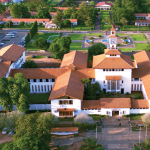

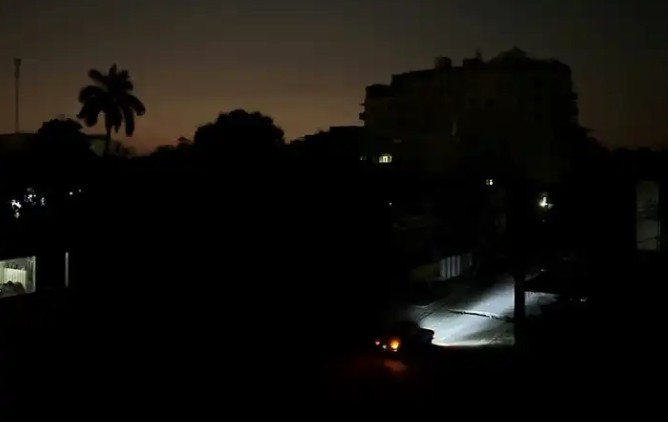
Residents of Elizabeth Frances Sey Hall at the University of Ghana have been without electricity since around 4 a.m. on Saturday, August 22, 2026, with the power outage disrupting the daily activities of students.
The outage, which has continued into Sunday, August 23, has sparked renewed concerns among residents over the hall’s preparedness to deal with prolonged power interruptions.
Residents in neighbouring halls, all commonly referred to as “the Diaspora”, including Jean Nelson Aka Hall, Dr. Hilla Limann Hall and Alexander Adum Kwapong Hall, reportedly had access to generator power during the outage.
For Sey Hall residents, the consequences of the power interruption has gone beyond the inconvenience of having no lights.
According to some residents, the outage has significantly disrupted their daily routines.
“We’re unable to cook. Since yesterday, I have been buying food. I normally prefer homemade food to buying food outside. We’re not able to charge our gadgets for our academic activities too,” a Level 200 resident explained.
Some questioned the competence of the executives.
“The situation is very frustrating. These executives are not transparent enough to tell us the truth. Our room currently has a pungent smell because of our fridges. How come they had no idea they needed components until yesterday?”
Another student lamented that the situation had also created an unexpected financial burden for residents who could not prepare their own meals.
“Not everyone in the hall is a Dbee. Maybe the executives are Dbee, but not everyone is. We can’t be buying food three times in a day,” the resident said.
Another resident bemoaned using her last money to buy foodstuffs, only for them to start getting spoilt.
“I only get a little money and I have to manage it carefully, so I went to the market earlier this week to buy foodstuffs. I put them in the fridge, but now they’re getting spoilt because the fridge has been off since yesterday. I really don’t know how I’ll survive the next few weeks.”
The situation has also raised questions about the safety of students, as the hall remained poorly lit.
“How will we know if a thief enters the hall? The e-gate is not working and we can barely see when walking in the hall. Right now, keeping our things safe is in our hands,” a student questioned.
What caused the outage?
The Electricity Company of Ghana (ECG) announced on Tuesday, August 18, 2026, that exercises were being carried out to replace and upgrade overloaded transformers in parts of Accra.
The company indicated that such infrastructure works could result in localized technical issues and temporary power interruptions in affected areas as repairs are carried out.
However, it remains unclear whether the Sey Hall outage was directly linked to these works.
The Executives’ response
In an update to residents, the EFSH Executive Council said the necessary repairs on the hall’s generator had been completed.
According to the executives, the technician had conducted final checks and confirmed that the generator was in good working condition but recommended the addition of an extra component to complete the repairs.
They added that the necessary component could only be obtained on Sunday, meaning students would have to wait until then for the situation to be resolved. However, as of Sunday, August 23, power had still not been restored to the hall.
This response has done little to calm concerns among residents, raising serious questions about the fuel levies they were asked to pay before being able to access the hall’s services.
A recurring problem?
Students who have experienced previous power interruptions are questioning whether the EFSH Executive Council has adequate measures in place to respond when such essential utilities fail.
Why was the generator not fully operational before the outage? What contingency measures were available once it became clear that students would spend the night without electricity? And why were residents of Sey Hall left without an alternative power source while neighbouring halls within the Diaspora were able to rely on generators?
These questions are particularly significant given the fuel levies residents are required to pay. Students may reasonably expect that such payments contribute, at least in part, to ensuring that essential services and emergency arrangements are available when disruptions occur.
How are residents going to survive without electricity as the outage continues into another day?
As it stands, residents are still waiting for the promised restoration of power. But as their voices reveal, the issue is no longer simply about when the lights will come back on. It is about whether residents can trust that the next time the lights go off, their hall will be prepared to respond.
–
Story by Wilhemina Nii-Moi | Univers.ug.edu.gh
Edited by Erica Odeenyin Odoom