
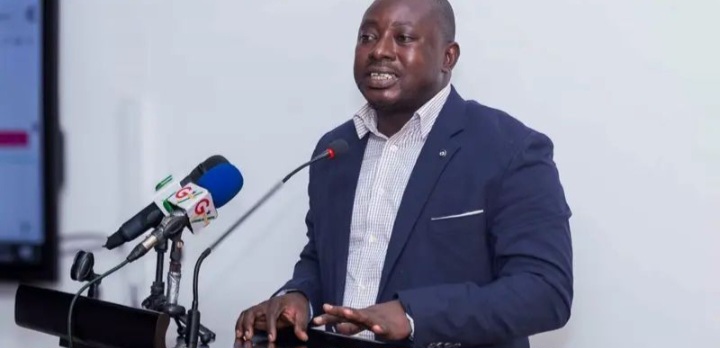
The University of Ghana (UG) branch of the University Teachers Association of Ghana (UTAG) has called for the immediate resignation of the Director-General of the Ghana Tertiary Education Commission (GTEC), Professor Ahmed Jinapor Abdulai, and his Deputy, Professor Augustine Ocloo, accusing them of abuse of power and actions that undermine Ghana’s tertiary education system.
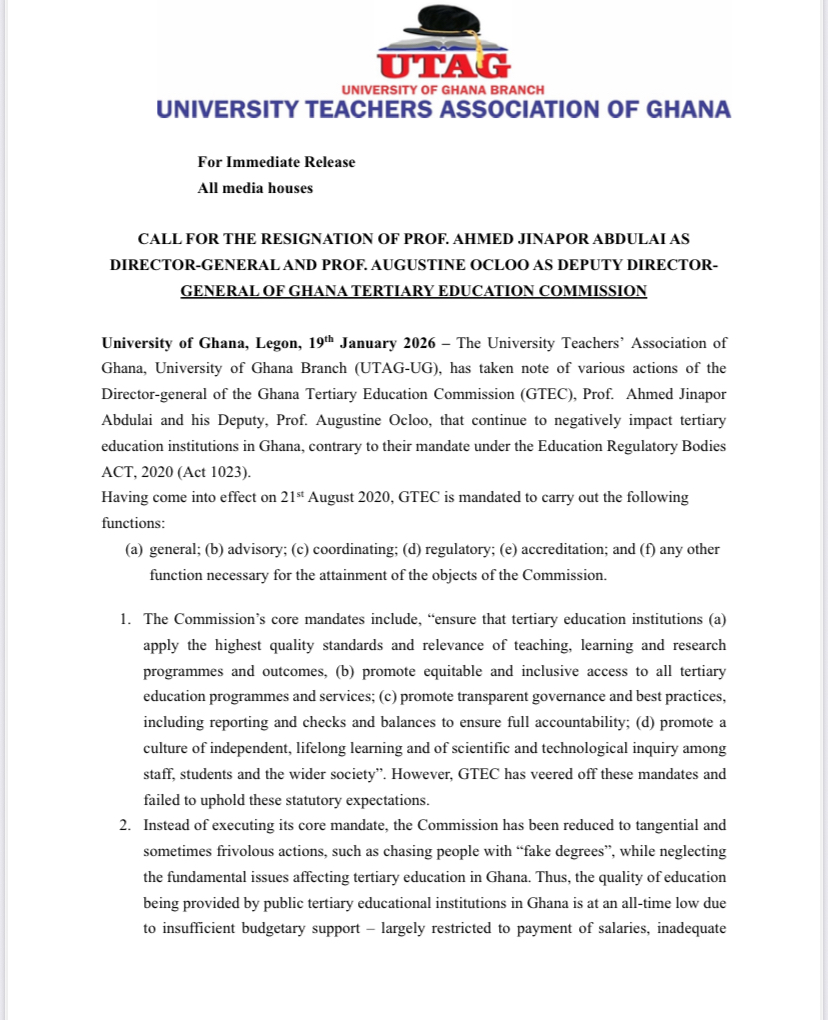
In a press statement dated January 19, 2026, UTAG-UG expressed concern over what it described as persistent actions by the leadership of GTEC that contradict the commission’s mandate under the Education Regulatory Bodies Act, 2020 (Act 1023).
“The University Teachers’ Association of Ghana, University of Ghana Branch (UTAG-UG), has taken note of various actions of the Director-General of the Ghana Tertiary Education Commission (GTEC), Prof. Ahmed Jinapor Abdulai, and his Deputy, Prof. Augustine Ocloo, that continue to negatively impact tertiary education institutions in Ghana, contrary to their mandate under the Education Regulatory Bodies Act, 2020 (Act 1023), having come into effect on 21st August 2020,” the letter read.
The teachers’ association went on to compare GTEC’s core mandate of overseeing and addressing fundamental issues affecting the tertiary education system with what it described as the current roles and policies of the commission’s leadership, arguing that the original mandate of the institution had been distorted.
“Instead of executing its core mandate, the Commission has been reduced to tangential and sometimes frivolous actions, such as chasing people with ‘fake degrees’, while neglecting the fundamental issues affecting tertiary education in Ghana. Thus, the quality of education being provided by public tertiary educational institutions in Ghana is at an all-time low due to insufficient budgetary support—largely restricted to payment of salaries— inadequate infrastructure, poor remuneration for lecturers, etc., and yet GTEC appears indifferent to these systemic problems that pose existential threats to tertiary education in Ghana,” the letter stated.
UTAG-UG further questioned GTEC’s silence on critical matters such as student-to-lecturer ratios, infrastructure standards, and mechanisms to ensure quality education delivery across public universities.
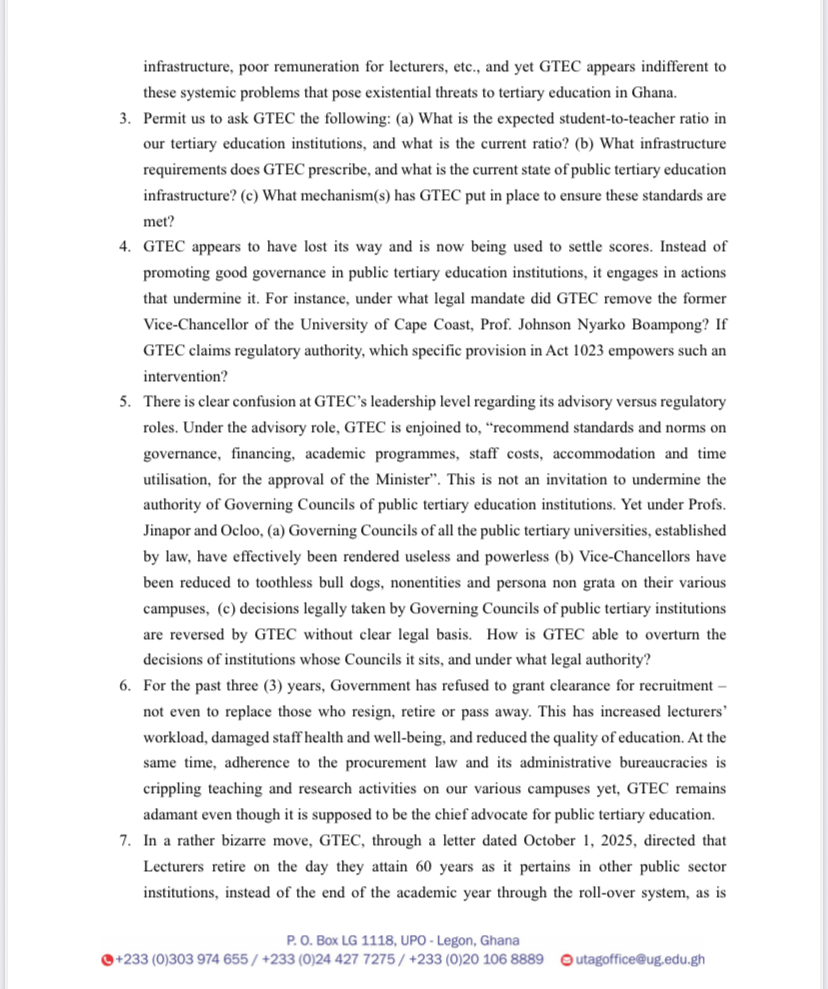
“Permit us to ask GTEC the following: What is the expected student-to-teacher ratio in our tertiary education institutions, and what is the current ratio? What infrastructure requirements does GTEC prescribe, and what is the current state of public tertiary education infrastructure? What mechanism(s) has GTEC put in place to ensure these standards are met?” the association queried.
On the issue of promoting good governance in public tertiary institutions, UTAG-UG stated that the commission had lost its direction and was now being used to settle scores. The association referenced and questioned the grounds on which the former Vice-Chancellor of the University of Cape Coast (UCC) was removed from office.
“GTEC appears to have lost its way and is now being used to settle scores. Instead of promoting good governance in public tertiary education institutions, it engages in actions that undermine it. For instance, under what legal mandate did GTEC remove the former Vice-Chancellor of the University of Cape Coast, Prof. Johnson Nyarko Boampong? If GTEC claims regulatory authority, which specific provision in Act 1023 empowers such an intervention?” they added.
According to UTAG-UG, the leadership of GTEC suffers from disorientation between its advisory and regulatory roles, resulting in actions that weaken governing councils and undermine the authority of vice-chancellors.
“There is clear confusion at GTEC’s leadership level regarding its advisory versus regulatory roles. Under Profs. Jinapor and Ocloo, Governing Councils of all the public tertiary universities, established by law, have effectively been rendered useless and powerless. Vice-Chancellors have been reduced to toothless bulldogs, nonentities, and persona non grata on their various campuses. Decisions legally taken by Governing Councils of public tertiary institutions are reversed by GTEC without clear legal basis. How is GTEC able to overturn the decisions of institutions whose Councils it sits on, and under what legal authority?”
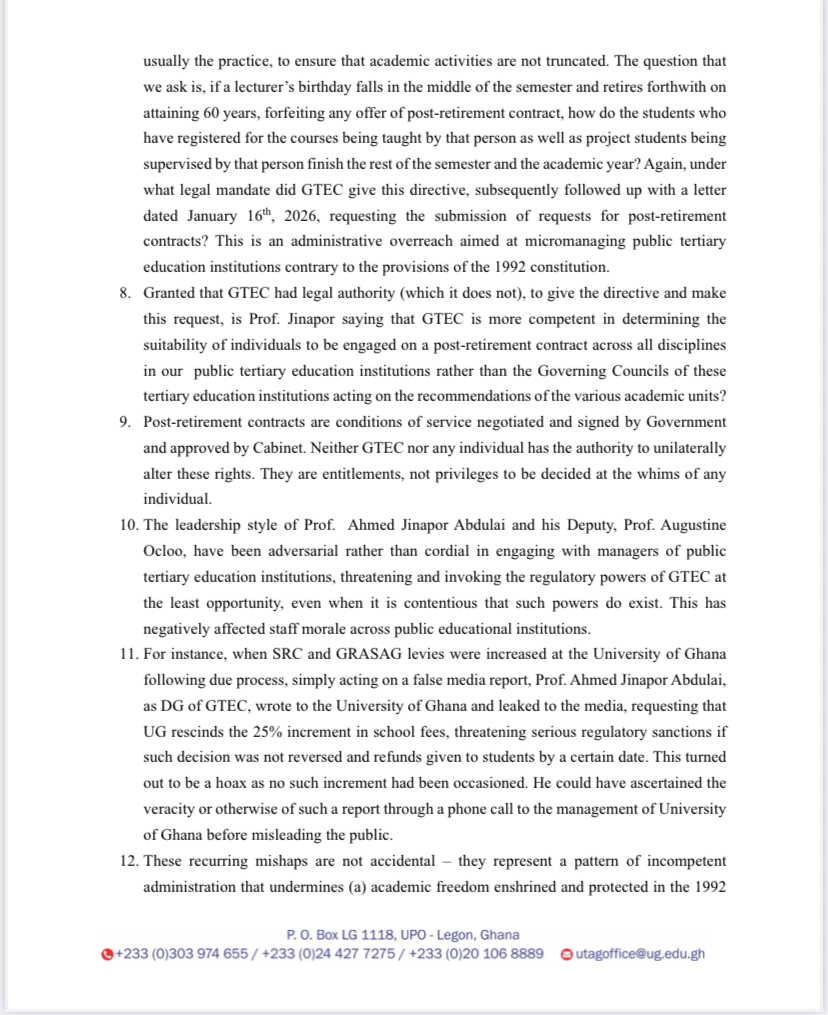
UTAG-UG also criticised a directive issued by GTEC in October 2025, which required lecturers to retire immediately upon attaining the age of 60, rather than completing the academic year under the rollover system. The association described the directive as disruptive to teaching and supervision, and an administrative overreach that contradicts established academic practice.
The association further referenced recent tensions surrounding fees and levies at the University of Ghana, accusing the GTEC Director-General of acting on unverified media reports and threatening sanctions without proper engagement with university management.
“These recurring mishaps represent a pattern of incompetent administration that undermines academic freedom, institutional autonomy, and the principles UTAG defended when opposing the Public Universities Bill,” the association stated.
As part of its demands, UTAG-UG called on Professors Jinapor Abdulai and Ocloo to resign honourably by January 31, 2026. The association warned that failure to comply would result in a petition to the Chief of Staff for their removal and possible industrial action. It also called for the immediate enactment of a Legislative Instrument (LI) to guide the implementation of Act 1023 and prevent future abuse of power by GTEC leadership.
“UTAG-UG calls on the DG, Prof. Ahmed Jinapor Abdulai, and DDG, Prof. Augustine Ocloo, to resign honourably by 31st January 2026. Failure to do so will result in a petition to the Chief of Staff for their removal and industrial action if necessary. Immediate enactment of a Legislative Instrument (LI) that will guide the implementation of Act 1023 is required to forestall future abuse of power by the leadership of GTEC,” the statement concluded.
The association urged other UTAG branches and stakeholders within the tertiary education sector to join the call to restore sanity and hope to Ghana’s public tertiary education institutions.

—
Story by Oliver Arthur Acorlor | univers.ug.edu.gh
Edited by Gabriel Tecco Mensah