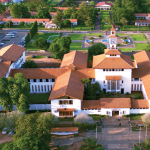

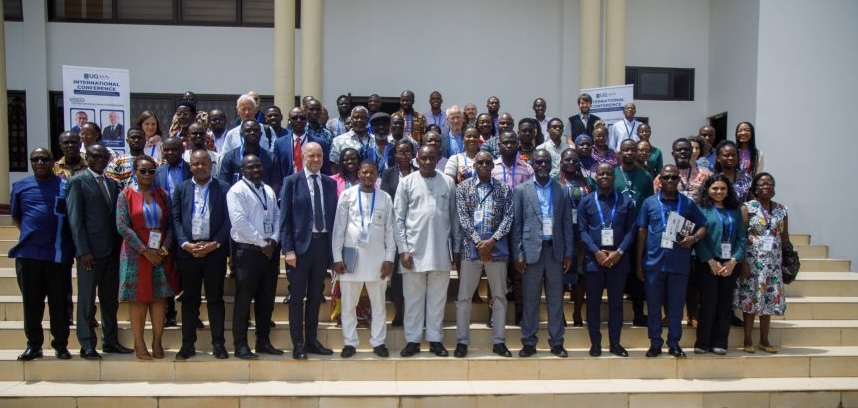
The Centre for Social Policy Studies at the University of Ghana (UG) has held a two-day international conference on energy transitions and inequality in Africa.
The conference was organised in collaboration with the Danish Institute for International Studies and Oxfam at the ISSER Conference Facility. It aimed to deepen discussions on how Africa can leverage the transition to cleaner energy systems while addressing persistent inequalities in the sector.
Speaking at the event, the Provost of the College of Humanities and Chair for the occasion, Prof. Joseph Awetori Yaro, underscored the timeliness of the conference, noting that discussions around transitioning to clean energy systems are both relevant and critical for Africa’s next phase of industrialisation and economic development.
“Energy transitions are now a critical component of the global economic agenda, and as such, we must amplify the African voice in shaping how economies can benefit from moving away from fossil fuel dependence to cleaner energy sources over time,” he said.
The Director of the Centre, Professor Abdul-Gafaru Abdulai, reflected on the growing global attention on energy transitions and their implications for the African continent.
“The data reveal that many African countries are heavily reliant on fossil fuel revenues and, as such, must strategically leverage existing resources through investments in clean energy systems, ensuring that the pace of transition and innovation supports both energy security and economic viability in the long run,” he said.
The conference featured a series of plenary sessions on key areas such as energy access, energy financing, policy frameworks, and the broader political implications shaping the continent’s energy transition mechanisms.
—
Story by Sika Togoh |univers.ug.edu.gh
Edited by Gabriel Tecco Mensah