
On the evening of Monday, October 13, 2025, something extraordinary happened on the volcanic archipelago off the coast of West Africa.
Cape Verde, a nation of just over 525,000 people, achieved what once seemed impossible — qualifying for the 2026 FIFA World Cup.
It was a night that transformed the small island nation into a symbol of belief and perseverance, marking one of the most remarkable underdog stories in football history.
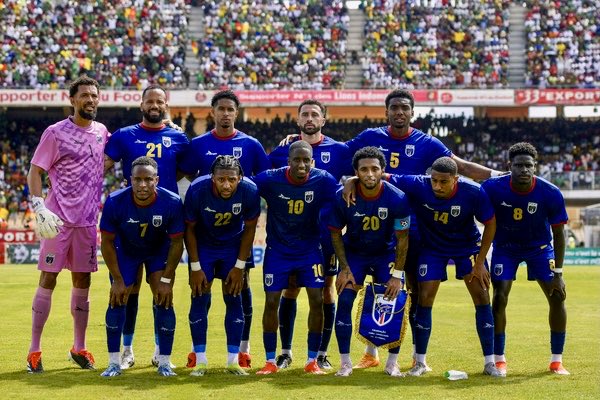
Cape Verde’s journey to this moment was long and challenging. Drawn into a tough qualifying group that included Cameroon, Angola, Libya, Eswatini, and Mauritius, the Blue Sharks were never considered favourites.
Yet, through consistency, spirit, and tactical discipline, they defied expectations. After a slow start filled with tense draws and narrow wins, the team gradually built confidence and momentum.
When they faced Eswatini in their final qualifier, they knew victory would make history. Anything less would open the door for Cameroon to overtake them.
In a tense atmosphere in Praia, the capital, the match kicked off with the nation holding its breath.
The first half ended goalless, but Cape Verde refused to panic. Just three minutes into the second half, Dailon Rocha Livramento capitalized on a loose ball to score the opener, sending the packed Estádio Nacional into chaos.
Six minutes later, Willy Semedo doubled the lead with a composed finish that felt like destiny unfolding. When veteran defender Stopira added a late goal in stoppage time, the stadium erupted. The Blue Sharks had done it — Cape Verde was going to the World Cup.
The final whistle unleashed scenes of pure joy. Fans poured into the streets waving national flags, singing songs of unity and pride.
The players, many of whom grew up watching past Cape Verde teams struggle for recognition, embraced each other in disbelief. By finishing top of Group D with 23 points, four ahead of Cameroon, Cape Verde secured their first-ever ticket to football’s biggest stage.
For Cape Verde, this achievement was far more than a sporting milestone. It was a national statement.
A country made up of ten islands, long known for its music, culture, and diaspora, had shown that size does not define ambition.
The government declared a half-day holiday so citizens could witness the historic moment. From Praia to Mindelo, from Santo Antão to Sal, the entire nation celebrated as one.
This qualification is the result of years of careful planning, investment in local infrastructure, and a steady rise in international football.
Cape Verde has consistently performed well in recent Africa Cup of Nations tournaments, earning respect as one of the continent’s most organized and tactically sound teams.
The mix of local talent and European-based players from the diaspora has given the team depth, balance, and belief.
By qualifying for the 2026 World Cup, Cape Verde becomes the second-smallest nation by population ever to reach the tournament, following Iceland in 2018.
For a country of fishermen, traders, and dreamers, this is a moment that transcends sport. It represents hope — proof that with unity, dedication, and vision, even the smallest nations can stand tall among giants.
The Blue Sharks will now join Africa’s best — Morocco, Ghana, Egypt, Algeria, Tunisia, Senegal, South Africa, and Côte d’Ivoire — on the world stage when the tournament kicks off across the USA, Canada, and Mexico.
Expectations will be modest, but the pride of participation will be immeasurable. For Cape Verdeans everywhere, simply hearing their anthem at the World Cup will be the reward of a lifetime.
Cape Verde’s qualification is a reminder of what makes football the world’s game. It is unpredictable, emotional, and magical.
It gives power to the powerless and voice to the overlooked. The Blue Sharks have shown that greatness can come from anywhere — even from a tiny island that dared to dream.
–
Story by Samuel Annang|univers.ug.edu.gh
Edited by Erica Odeenyin Odoom