

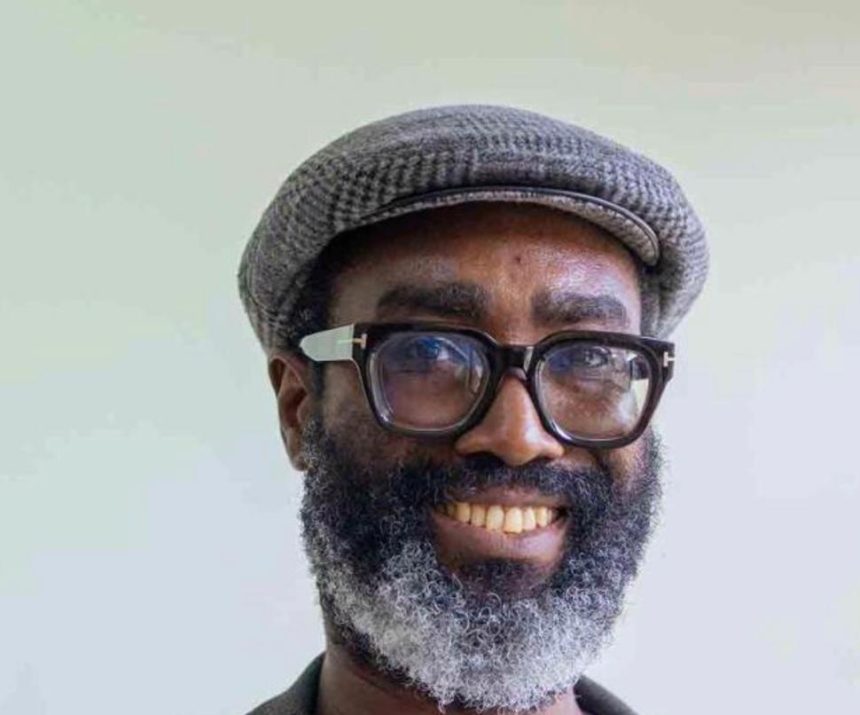
Senior Research Fellow at the Institute of Statistical, Social and Economic Research (ISSER) at University of Ghana, Dr. Kofi Takyi Asante, has dismissed assertions that democracy is a western invention, describing such claims as historically inaccurate and misleading.
Speaking at the 2026 public forum of the Ghana Academy of Arts and Sciences on Monday, June 1, 2026, Dr. Asante argued that the demand for democratic governance is a universal aspiration that cuts across cultures and societies.
The forum was held under the theme, “The Elusive Democratic Dividend: Citizen-State Relations and the Crisis of Political Legitimacy in Ghana.”
“It is important to squarely reject the outrageous lie that democracy is of Western origin, and I find it necessary to emphasize this point because there is a growing sentiment that we need to reject democracy because of its Western origin,” Dr. Asante stated.
He explained that historical examples often cited as the foundations of democracy were themselves deeply flawed.
“Athenian democracy comfortably coexisted with slavery, and women had no place in this democracy. The desire for democracy exists in all human societies,” he added.
Dr. Asante noted that African intellectuals, activists, and civil society groups had long championed democratic reforms and accountable governance, particularly during the 1970s and 1980s.
“In the 1970s and 1980s, activists and scholars in Africa had tirelessly mobilized for political change under the banner of good governance, with demands that focused on restructuring state-society relations and addressing concrete material needs, in other words, for substantive democracy,” he said.
However, he argued that the concept of good governance gradually lost its original focus after being adopted by international financial institutions.
According to him, the notion became narrowly defined around administrative reforms and electoral processes while overlooking broader concerns about social and economic transformation.
“The actual use of the concept of good governance, after it was co-opted by the World Bank, sidestepped the central concerns of Africans and rendered the notion purely administrative, in other words, limited to the ballot box and piecemeal administrative reforms,” he explained.
Dr. Asante further challenged the view that patronage politics can simply be attributed to the personal failings of political leaders.
“This is based on the assumption that patron-client relations is a personal flaw of individual leaders. However, the persistence and indeed intensification of clientelistic exchanges in the context of robust political competition suggests that this belief is deeply flawed,” he noted.
Drawing on data from the Afrobarometer surveys, he observed that support for democracy in Ghana remains consistently strong despite concerns about governance and political legitimacy.
“Across various rounds of the Afrobarometer survey, we can see support for democracy has generally remained very high, as has preference for choosing political leaders through elections rather than other means,” he said.
He added that the lowest recorded level of support for democracy still represented a majority of respondents.
“The lowest it’s come has been in the second round, which is 51.6%, which is still a majority,” he stated.
He also highlighted widespread public rejection of authoritarian forms of governance.
“Similarly, there’s a strong disapproval of one-party rule and one-man rule. This shows liberal democratic values are deeply entrenched in Ghanaian popular culture,” he stressed.
He concluded by noting that issues consistently raised by Ghanaian voters reflect a desire for governments to deliver tangible improvements in living conditions and public services, underscoring the need to strengthen citizen-state relations beyond electoral politics.
The forum, held under the theme “The Elusive Democratic Dividend: Citizen-State Relations and the Crisis of Political Legitimacy in Ghana,” brought together academics, students, and members of the public to discuss the state of democracy and governance in the country.
–
Story by Albert Otokunor Sampah | univers.ug.edu.gh
Edited Erica Odeenyin Odoom