
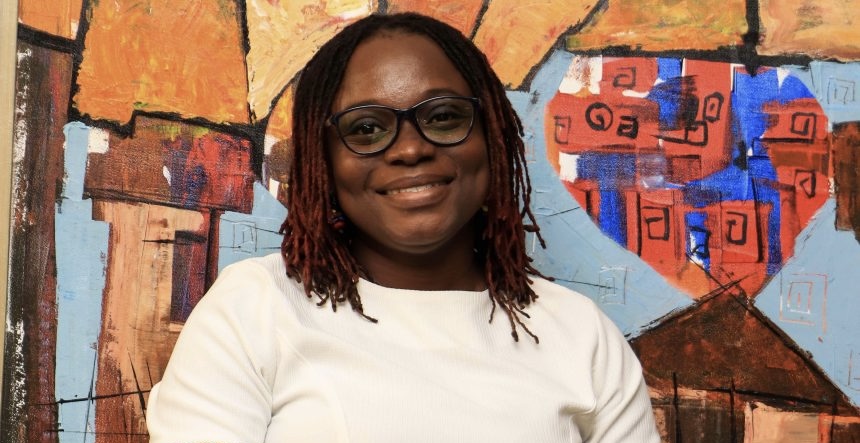
Senior Lecturer at the Department of Linguistics at the University of Ghana, Dr. Dorothy Pokua Agyepong, has raised concerns over the declining use of Ghanaian languages among young people, describing the situation as a reality rather than a myth.
Her comments follow growing concerns that many young Ghanaians are becoming more comfortable speaking English than their mother tongues. Many children are increasingly being raised in English-speaking environments, both at home and in school, limiting their ability to speak their native languages fluently.
Speaking in an interview with Univers News, Dr. Agyepong noted that many children in urban areas, particularly in Accra, are unable to speak or even understand their indigenous languages.
According to her, it is now common to meet children whose parents belong to specific ethnic groups but who cannot communicate in their native languages.
“You can meet a child on the streets of Accra who cannot speak any Ghanaian language apart from English,” she said. “Even if the parents are Ga or Ewe, the child may not understand the language at all.”
Dr. Agyepong explained that the increasing preference for English—and in some cases, Pidgin English—among young people is contributing to the decline in the use of local languages.
She warned that if the trend continues, some Ghanaian languages could gradually disappear, attributing the situation partly to the perception that English is more prestigious and more useful for social and economic advancement.
“Because English is the official language, many people see it as superior to Ghanaian languages,” she said. “Parents often ask what kind of jobs their children can get if they focus on local languages.”
Dr. Agyepong further highlighted social changes that limit children’s exposure to local languages. Unlike in the past, when many families lived in compound houses and interacted with neighbours from different ethnic backgrounds, many children now grow up in more isolated environments.
“Children spend most of their day in school where English is used, and when they return home, parents also speak English with them,” she explained. “They do not go out to play with neighbours as much as before, so they have fewer opportunities to hear and learn different languages.”
She stressed that parents have a crucial role to play in preserving Ghanaian languages by intentionally speaking them at home, noting that language is an important part of identity.
“If you do not pass your language on to your child, the child loses part of their identity,” she said.
Dr. Agyepong encouraged Ghanaians, especially parents and young people, to take deliberate steps to preserve their languages.
“The most important thing,” she said, “is to make sure that we pass our languages on to the younger generation.”
She also acknowledged that making one Ghanaian language a national language has been challenging due to strong ethnic and linguistic identities across the country. Selecting one language, she noted, could make speakers of other languages feel marginalised.
However, she suggested that Ghana could learn from countries such as South Africa, where multiple languages are recognised and used in official spaces.
—
Story by Naa Amarley Amarteifio | univers.ug.edu.gh
Edited by Gabriel Tecco Mensah