
I am still struggling to come to terms with Alhaji’s passing. Grief has a way of slowing memory down; mine keeps returning to 1997, to a young volunteer walking into Radio Univers with no corporate experience and very little understanding of what professionalism truly meant.
Dr. Abubakari Sidick Ahmed, Alhaji as we affectionately called him, was my first boss. He never treated Radio Univers like a campus hobby. He ran it with discipline and purpose, convinced that even a student station must operate like a serious newsroom. Under him, we learned punctuality, production standards, and, above all, respect for the microphone. Despite being volunteers, there were no shortcuts.
Alhaji was the station’s backbone. If a newsreader did not show up, he went on air himself. If something broke, he fixed it. If a script was weak, he sat down and rewrote it with you. He was in every unit of the station when the moment demanded it.
He took the work personally, not out of ego, but out of a deep sense of responsibility. For our 7:00 a.m. show, Campus Exclusive, he was almost always the first to arrive and would occasionally discuss content issues with us. He always arrived early to prepare for his 7:30 a.m. newspaper review. His presence taught us a silent lesson: excellence begins long before the broadcast light turns red.
For over three decades, Alhaji gave his life to Radio Univers, rising from a student journalist to become its longest-serving Station Manager. He turned the station into a force that shaped Ghana’s media landscape. The list of those he mentored is a “Who’s Who” of the industry, with names like Bola Ray, DJ Black, Shamima Muslim, Bernard Avle, and Kafui Dey, alongside esteemed academics such as Prof. Felix Odartey-Wellington, Prof. Nana Akua Anyidoho, Prof. Kwesi Tieku, and Dr. Amanda Coffie, among many others.
But beyond the famous names, his true legacy is the ethic he instilled: that leadership is consistency, that standards matter even when no one is watching, and that young people rise when someone expects more from them.
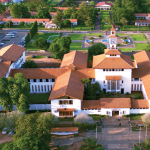
He was firm and fair, deeply invested in helping young people find their voices. He was also my neighbour on the ground floor of the Tutors’ Apartment, E Block, Mensah Sarbah Hall, University of Ghana. As a devout Muslim, he was a quiet neighbour who kept to his lane, so much so that it took me a while to even realize he lived there.
Alhaji was my first boss, and he quietly set the standard for how I understand work and leadership to this day.
May he rest in peace. May his legacy endure.
—
Article by Lamisi Dabire