
The Ghana Center for Democratic Development (CDD-Ghana) has called for stronger regulations on political financing to curb the growing influence of money in Ghana’s electoral process and strengthen democratic accountability.
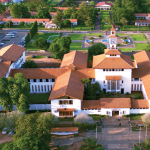
The call was made during a seminar held at the Kofi Drah Conference Room of the Department of Political Science, University of Ghana, on Monday, June 22, 2026.
The programme, themed “Reducing the Negative Influence of Money in Party and Public Elections in Ghana,” brought together students and youth groups from several tertiary institutions, including the University of Ghana (UG), the University of Media, Arts and Communication (UNIMAC), Accra Technical University (ATU), and the University of Professional Studies, Accra (UPSA).
The seminar formed part of CDD-Ghana’s efforts to engage young people on political campaign financing, democratic governance, and electoral reforms.
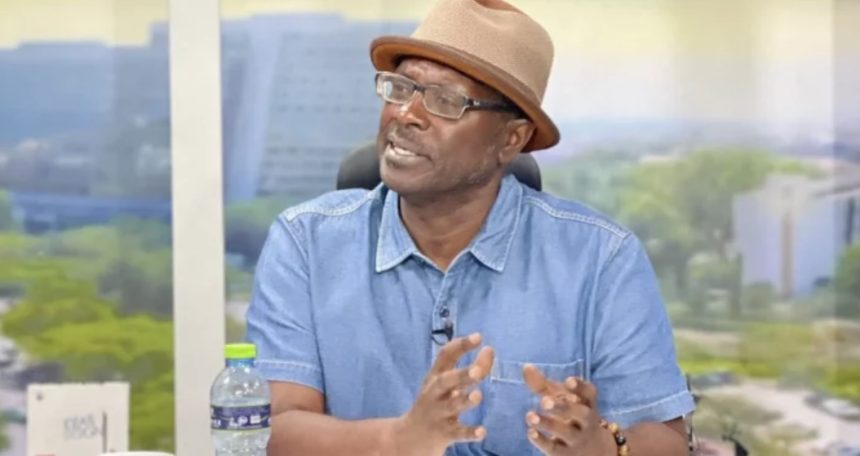
Facilitating the discussion, D&D Fellow in Public Law and Justice at CDD-Ghana, Professor Stephen Kwaku Asare expressed concern about the increasing role of money in Ghana’s democratic process, arguing that financial resources are beginning to overshadow ideas, competence, and public service.
According to him, political finance covers both the funding of political parties and campaign activities, making it a critical area for reform.
“Political finance is a big term that covers the financing of political parties as well as the financing of campaign activities. We want to regulate both,” he explained.
Professor Asare argued that Ghana’s democratic system is increasingly becoming a “moneycracy, ” where financial resources have begun to outweigh ideas and competence in determining political success.
“I think our democracy has been converted into a Moneycracy. Money is becoming more important than ideas. The whole notion of democracy is that everyone can talk and ideas will emerge because ideas are transformational and can lead to solutions,” he said.
He cited research indicating that the cost of seeking political office has risen significantly over the years, creating barriers for ordinary citizens and young people who aspire to participate in governance.
The legal scholar also revealed that political financiers often invest in candidates with expectations of future returns, a situation he believes contributes to corruption and abuse of public resources.
“People are now investing in MPs and presidents. When you invest in people and give them money, you seek returns, and that is what is driving corruption and looting,” he stated.
Professor Asare further expressed concern about foreign influence and undisclosed sources of political funding, noting that weak enforcement of existing laws has undermined transparency and accountability within the political system.
He maintained that the current Political Parties Act is outdated and no longer adequate to address contemporary challenges in Ghana’s democracy.
According to him, a proposed Political Parties Bill, 2026, seeks to strengthen regulations and improve oversight of political financing.
“This is a bill that is not coming from Parliament yet. It is coming from civil society. The idea is to build consensus and support for the bill before it gets to Parliament and get the whole country to come along because all of us feel there is a need for change,” he explained.
He outlined several reasons for introducing the new legislation, including the need to operationalize constitutional provisions, modernise existing laws, ensure transparency, and promote fair competition among political actors.
“We need to operationalize the constitutional requirements. We need to upgrade the statutory requirements and track the evolution of our democracy. We need to promote free, fair and transparent elections, ensure a level playing field, prevent illicit funding, boost public confidence, and sustain our democracy,” he said.
He disclosed that one of the key proposals in the new bill is the establishment of an independent Registrar of Political Parties to oversee compliance and ensure continuous regulation of political parties.
Participants described the seminar as timely and insightful, noting that it deepened their understanding of the relationship between campaign financing, governance, and accountability.
Many students said the discussions encouraged them to become more engaged in democratic processes and advocate for reforms that promote transparency and equal opportunities in politics.
The event concluded with a call for greater youth participation in democratic reforms, with speakers urging students to remain informed, engaged, and active in shaping Ghana’s political future.
–
Story by Martin Awaitey Odjidja | univers.ug.edu.gh
Edited by Erica Odeenyin Odoom