

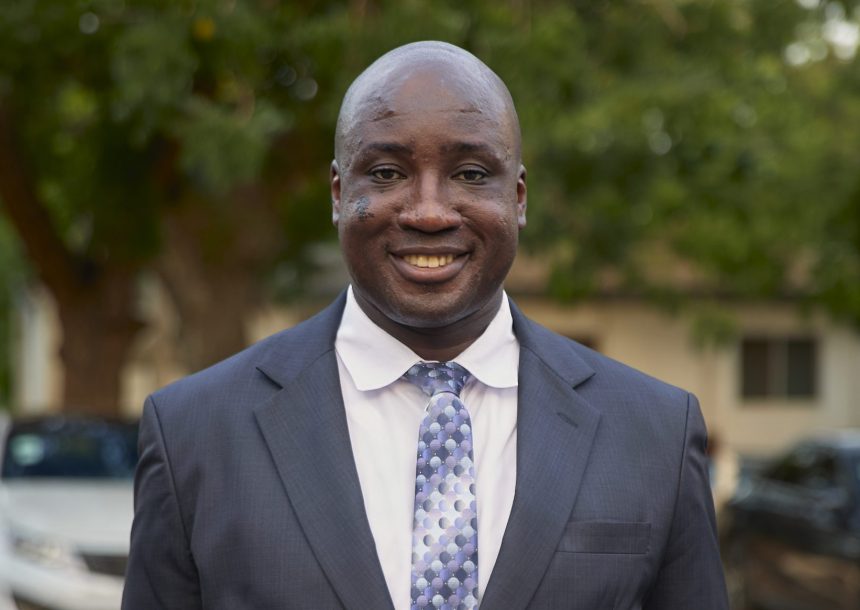
Dean of the Ghana Institute of Management and Public Administration (GIMPA) Law School, Dr. Kwaku Agyeman-Budu, has issued a strong call for comprehensive legal reforms and inclusive policy making to address the climate crisis in Ghana.
Speaking at the opening ceremony of the 2025 GIMPA Law Conference on Climate Justice, Dr. Agyeman-Budu emphasized the urgent need to center vulnerable communities in national and international climate strategies.
The two-day conference, themed “Climate Justice in Ghana: The Role of Law and Policy Towards Sustainable Development,” was held on April 3 and 4, at the GIMPA Law School’s Dr. Daniel McKorley Moot Courtroom. It convened students, academics, legal practitioners, and climate stakeholders to deliberate on Ghana’s response to climate change through the lens of justice and human rights.
Delivering his keynote address, Dr. Agyeman-Budu described climate change as a profound social and legal issue that disproportionately affects women, children, and the poor—groups often left out of policy conversations. He called for climate laws that are not only scientifically sound and enforceable, but also inclusive and grounded in justice.
“Laws and policies must reflect the voices of those most impacted by the climate crisis. We must ensure that climate justice in Ghana is not just about the environment but also about equity and human dignity.”
As part of GIMPA Law School’s commitment to addressing climate change, the Dean announced the establishment of a new research center focused on climate law and policy. The center will drive legislative reform, support academic research, and offer capacity-building programs for legal practitioners, judges, and policymakers.
He further revealed that new courses on climate law will soon be introduced into both the LL.B. and LL.M. curricula. These courses aim to equip students with the knowledge and tools to tackle real-world climate issues and actively participate in national and global climate justice advocacy.
“We are preparing to introduce new courses on climate law and policy at both the LL.B and LL.M levels, and to establish a dedicated research center on climate law and policy to enhance our teaching, research, and advocacy efforts. The courses will explore a wide array of critical topics, including international climate change law, climate justice and human rights, sustainable development, and mechanisms for climate change litigation and dispute resolution.”
Dr. Agyeman-Budu also highlighted the need for stronger institutional frameworks, technical capacity, and public engagement to achieve effective climate governance. He criticized Ghana’s current climate legal regime for lacking enforcement mechanisms and opportunities for citizen participation, particularly in rural and underserved communities.
–
Story by: Wahab Abdul Razak | univers.ug.edu.gh